नोट
Getting to Know the Blue Morpho Butterfly A Wonder of the Natural World
The Blue Morpho butterfly, with the scientific name Morpho menelaus, is among the most breathtaking and easily recognizable butterflies globally. Its shimmering blue wings spark curiosity and inspire a sense of awe. If you want to see these beauties in person, visit The Butterfly House at Navy Pier in Chicago!
Sophia Turner
लेखक
मेटा
संदर्भ फील्ड नीचे उपलब्ध।
टाइप
पल्स नोट
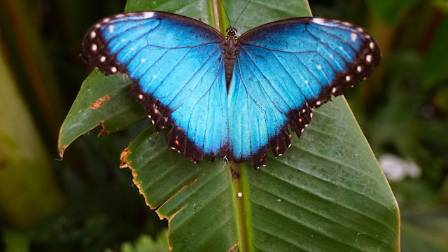
The Blue Morpho butterfly, with the scientific name Morpho menelaus, is among the most breathtaking and easily recognizable butterflies globally. Its shimmering blue wings spark curiosity and inspire a sense of awe. If you want to see these beauties in person, visit The Butterfly House at Navy Pier in Chicago!
Life Cycle of the Blue Morpho Butterfly
The Blue Morpho butterfly goes through a full metamorphosis, consisting of four stages: egg, larva (caterpillar), pupa (chrysalis), and adult.
Egg: The female Blue Morpho lays her eggs on the undersides of host plant leaves—often on plants like pea species. These small, green eggs are usually placed one at a time, which lowers the risk of predators targeting multiple eggs at once.
Larva (Caterpillar): When the eggs hatch, the caterpillars start eating the host plant leaves voraciously. Blue Morpho caterpillars are notable for their reddish-brown bodies with white patches. They also have urticating hairs (stiff bristles) that can irritate predators, offering a small layer of defense.
Pupa (Chrysalis): After shedding its skin several times, the caterpillar forms a chrysalis. This stage is a period of dramatic change, during which the caterpillar transforms into an adult butterfly. The Blue Morpho’s chrysalis is green, allowing it to blend in with surrounding foliage and hide from predators.
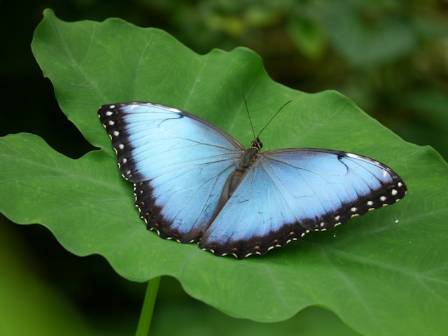
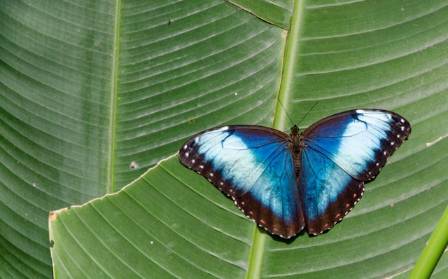
Adult: Once it emerges from the chrysalis, the adult Blue Morpho shows off its stunning blue wings. These butterflies have an impressive wingspan, ranging from 5 to 6 inches (12 to 15 centimeters). The top side of their wings has an iridescent blue hue, while the underside is brown with eyespots—providing effective camouflage when the wings are folded.
Lifespan
The lifespan of the Blue Morpho butterfly depends on environmental conditions and the risk of being preyed upon. Typically, adult Blue Morphos live for around 115 days. The entire life cycle, from egg to adult, can also take roughly 115 days, but this duration can change based on temperature and other environmental factors.
Diet
The Blue Morpho butterfly’s diet shifts as it moves through different life stages.
Caterpillars: In the larval stage, Blue Morpho caterpillars feed on the leaves of their host plants. These plants usually include various types of pea plants and other legumes, which provide the nutrients the caterpillars need to grow.
Adults: Adult Blue Morpho butterflies mainly feed on the juices from rotting fruits. They use their proboscis, a long, tube-shaped mouthpart, to suck up the fermenting liquids. Additionally, they are known to sip tree sap, fungi, and fluids from decomposing animals to get essential nutrients.
Habitat and Distribution
Blue Morpho butterflies are native to the tropical forests of Central and South America. They are commonly found in countries such as Brazil, Venezuela, Costa Rica, and Ecuador. These butterflies prefer lowland rainforests but can also be spotted in secondary forests (forests that regrow after disturbance) and other wooded areas.
In their natural habitat, Blue Morpho butterflies spend most of their time in the forest canopy. This high-up area keeps them safe from many ground-dwelling predators. However, they do fly down to the forest floor to feed on rotting fruits and other food sources.
Behavior and Adaptations
The Blue Morpho butterfly has several interesting behaviors and adaptations that help it survive in its environment.
Camouflage: The underside of the Blue Morpho’s wings is brown with eyespots. When the butterfly closes its wings, this coloring helps it blend into its surroundings, making it harder for predators to spot.
Flight: Blue Morpho butterflies are strong fliers and are known for their slow, unpredictable flight patterns. This erratic movement makes it difficult for predators to catch them. Moreover, the sudden flash of blue from their wings as they fly can startle and confuse predators, giving the butterfly a chance to escape.
Mimicry and Warning: The iridescent blue color of their wings is not caused by pigment. Instead, it comes from structural coloration—tiny scales on the wings reflect light in a way that creates the bright blue appearance. This striking color can also act as a warning to potential predators, signaling that the butterfly tastes bad and is not a good meal.
Conservation
While the Blue Morpho butterfly is not currently classified as endangered, its habitat is threatened by deforestation and habitat fragmentation in tropical rainforests. Protecting these butterflies and their natural homes requires dedicated conservation efforts. Organizations and researchers are working to promote sustainable practices (such as responsible logging and agriculture) and safeguard the rainforests that Blue Morphos depend on.
Conclusion
The Blue Morpho butterfly is truly a wonder of nature, with its eye-catching blue wings and fascinating life cycle. From its start as a tiny egg to its transformation into a stunning adult butterfly, the Blue Morpho captivates anyone lucky enough to observe it. Learning about the lives and habits of these butterflies not only deepens our appreciation for them but also highlights how important it is to protect their tropical habitats. Whether you see them in the wild or at The Butterfly House at Navy Pier in Chicago, the Blue Morpho butterfly is sure to leave a lasting impression.