नोट
Facts about Pine Nuts
Pines belong to the genus Pinus within the family Pinaceae and are long-living evergreen conifers with origins tracing back to the Jurassic era. With more than 100 species, they represent the largest group within the biggest conifer family and are able to grow in a wide range of environments, from arid deserts to humid rainforests and even extreme high altitudes reaching about 5,200 meters.
Lillian Montague
लेखक
मेटा
संदर्भ फील्ड नीचे उपलब्ध।
टाइप
पल्स नोट
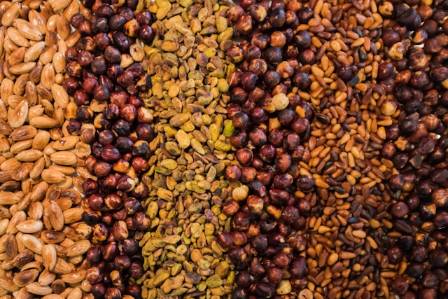
Pines belong to the genus Pinus within the family Pinaceae and are long-living evergreen conifers with origins tracing back to the Jurassic era. With more than 100 species, they represent the largest group within the biggest conifer family and are able to grow in a wide range of environments, from arid deserts to humid rainforests and even extreme high altitudes reaching about 5,200 meters.
These resin-producing gymnosperm trees reproduce through exposed seeds formed in cones, with both male and female cones present on the same plant. The male cones are soft, short-lived structures that release pollen, which is carried by wind to the sturdier female cones. These woody cones, arranged in spirals of scales, protect developing seeds for two to three years before they mature. When conditions become warm and dry, the cones open to release seeds, and they close again in humid conditions to protect their contents.
One of the most notable species is the Great Basin bristlecone pine (P. longaeva), which survives in harsh mountainous regions and is recognized as one of the longest-living trees on Earth, with some individuals exceeding a thousand years. The durability and adaptability of pines have made them enduring symbols of strength and survival in nature.
Male and Female Cones
Male cones are typically soft structures that exist briefly and are responsible for producing and releasing pollen into the air. Their main role is reproduction through wind dispersal.
Female cones are more rigid and long-lasting. They develop seeds after fertilization and protect them as they mature over several years before eventually releasing them when conditions are suitable.
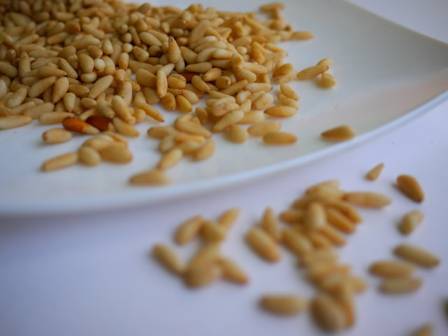
Fact 1: Protectors of Earth’s Natural History
Pine trees generally require five to ten years before they begin producing cones, reflecting a slow but steady growth cycle. Once mature, they can continue producing seeds for many decades. Female cones take around two to three years to fully develop after fertilization.
Depending on the species, some cones open when they reach maturity, while others remain closed for years until triggered by environmental factors such as decay, animals searching for food, or fire. After harvesting, cones must be dried in a warm environment so that seeds naturally fall out.
Although commonly called nuts, pine nuts are actually seeds enclosed within cones rather than true botanical nuts. In some cases, pine trees may take up to 25 years before producing a significant crop, and cones may require several years to fully mature and release seeds, making pine nuts both rare and valuable.
Despite this slow reproductive cycle, pine trees have survived dramatic planetary changes, including asteroid impacts that contributed to the extinction of dinosaurs. Their long-term survival demonstrates the success of their evolutionary strategy, and pine seeds remain a symbol of endurance across geological time.
Fact 2: Culinary Uses from Tradition to Modern Cuisine
Pine nuts, known as chilgoza in India, are small ivory-colored edible seeds also referred to as pignoli or piñon depending on the region. The Stone Pine (Pinus pinea), which thrives in warmer climates, is particularly important in producing these seeds.
Historically, pine nuts were valued by ancient civilizations such as the Greeks and Romans. Archaeological findings from Pompeii even revealed their presence in ancient diets, highlighting their long-standing culinary importance. In Genoa, pine nuts are essential in traditional pesto, where their distinct flavor contributes to the sauce’s signature taste.
Their flavor profile includes subtle notes derived from natural compounds such as pinene and limonene, giving them a characteristic resin-like aroma that has been appreciated for centuries.
In Middle Eastern cuisine, pine nuts are commonly used in dishes like stuffed grape leaves with rice and currants, as well as in rice pilafs. They also appear in Mediterranean salads, chutneys, vegetable dishes, and desserts across Italian and Catalonian culinary traditions, where they complement both savory herbs and sweet ingredients.
Fact 3: Pine Nut Syndrome and Sensory Effects
Pine Nut Syndrome, also known as “pine mouth,” is a rare condition in which individuals experience a lingering bitter or metallic aftertaste after consuming pine nuts. This sensation typically appears within 12 to 48 hours after eating them and may last for several days or even weeks.
Certain species, such as Pinus armandii, are most frequently associated with this effect, although mixed batches of pine nuts may also be responsible. The exact cause remains unclear, but some studies suggest a genetic link related to taste perception, particularly variations in the TAS2R38 gene.
Although unpleasant, this condition is not harmful. The only reliable way to prevent recurrence is to avoid consuming pine nuts.
Even though pine nuts are rich in nutrients, they should still be eaten in moderation as part of a balanced diet.
Fact 4: Nutritional Benefits of Pine Nuts
Pine nuts are highly nutritious, containing important minerals and healthy fats that support overall health. They are a good source of manganese, which supports bone strength, and vitamin E, which contributes to heart health.
They also contain iron and zinc, both essential for oxygen transport and immune system function. Research suggests that maternal consumption of nuts, including pine nuts, during pregnancy may be linked to improved cognitive development and memory in children.
Their high content of beneficial oils, particularly pinolenic acid, may help regulate appetite by promoting feelings of fullness, which can support weight management.
The rich, buttery flavor of pine nuts comes from their natural balance of mono- and polyunsaturated fats. These fats are associated with cardiovascular benefits and may also play a role in managing metabolic conditions.
Low in sugar and sodium, pine nuts also contain antioxidants and essential micronutrients, making them a nutrient-dense addition to many diets.
Fact 5: Varieties of Pine Nuts Around the World
Pine nuts differ significantly depending on the species of pine tree they come from. Out of many edible varieties, four are most commonly consumed globally.
Korean pine (Pinus koraiensis) produces large, elongated seeds with a mild, buttery flavor. These are widely used in cooking across East Asia, including stir-fries, desserts, and sauces.
Siberian pine (Pinus sibirica) produces medium-sized seeds that are slightly sweet and creamy. These are commonly found in Russia and neighboring regions and are often eaten raw or roasted.
Stone pine (Pinus pinea) produces large, teardrop-shaped seeds with a delicate, sweet flavor. This variety is central to Mediterranean cuisine, especially in Italy, where it is used in pesto, baking, and salads.
Chilgoza pine (Pinus gerardiana) produces smaller, elongated seeds with a rich, slightly resinous taste. These are popular in South Asia, particularly in Himalayan regions, where they are consumed raw or roasted.
Across all varieties, pine nuts offer a unique combination of flavor and nutrition, making them a valued ingredient in both traditional and modern cuisines around the world.
संबंधित

The World's Most Stunning Beaches: A Seaside Escape Like No Other

सर्दियों के अजूबे: बर्फीले सफ़र के लिए आरामदायक केबिन

स्टूडियो घिबली से प्रेरित 3डी पेपर शैडोबॉक्स बनाएं
गर्भावस्था के दौरान कीवी फल खाने के क्या लाभ हैं?

फ्लेमिंगोस गुलाबी क्यों हैं? और अन्य फ्लेमिंगो तथ्य