Introduction: The Timeless Essence of Shui Mo Painting
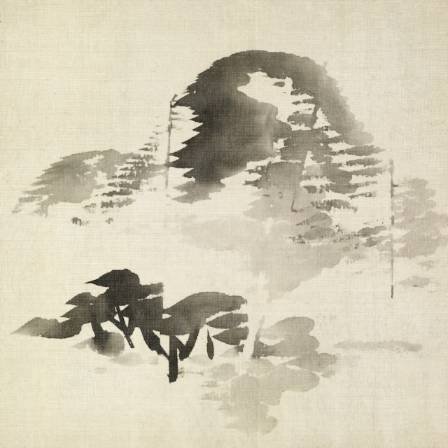
Shui Mo Painting, commonly known as Chinese ink wash painting, stands as one of the most profound and enduring art forms in Chinese cultural history. More than a mere visual creation, it is a spiritual practice that weaves together emotions, nature’s essence, and philosophical insights, offering a window into the Chinese worldview that values harmony between humans and the universe. For centuries, this art has transcended time and boundaries, evolving while retaining its core principles of simplicity, subtlety, and depth. As a supplier deeply passionate about Shui Mo Painting, we are honored to share its rich origin story, tracing its roots from ancient beginnings to its vibrant presence in the modern world. This journey not only reveals the technical evolution of the art but also reflects the cultural, social, and philosophical shifts that have shaped China over millennia.
Origin in the Han Dynasty (202 BC - 220 AD): The Birth of Ink and Water
The earliest traces of Shui Mo Painting can be traced back to the Han Dynasty, a period marked by significant advancements in writing materials and artistic experimentation. Before this era, Chinese scribes and artists primarily used brushes and ink for calligraphy on bamboo slips and silk, which were the dominant mediums for recording texts and ideas. During the Han Dynasty, however, the development of papermaking (a revolutionary invention credited to Cai Lun in 105 AD) provided a more accessible and versatile surface for creative expression. Artists began to explore the creative potential of ink beyond mere writing, discovering that varying the ratio of ink to water could produce an astonishing range of shades—from deep, jet-black to delicate, translucent grays. This discovery was pivotal: it transformed ink from a tool of communication into a medium of artistic expression, laying the foundation for the basic elements of Shui Mo Painting. Early works from this period were primarily simple illustrations in Buddhist scriptures, historical records, and literary manuscripts, focusing on narrative clarity rather than artistic abstraction. Yet, these humble beginnings showcased the unique ability of ink and water to convey texture, mood, and movement, hinting at the art form’s future potential.
Flourishing in the Tang Dynasty (618 - 907 AD): From Illustration to Independent Art
The Tang Dynasty, often hailed as China’s golden age of culture and prosperity, marked a turning point for Shui Mo Painting, elevating it from a decorative accessory to an independent and respected art form. This era’s political stability, economic prosperity, and cultural openness fostered a vibrant artistic environment, where artists were encouraged to explore new techniques and themes. One of the key figures of this period was Wang Wei, a poet, musician, and painter whose work seamlessly integrated poetry and painting—creating a style known as “shi hua yi ti” (poetry and painting as one). Wang Wei pioneered the use of landscape as a central theme, emphasizing the spiritual essence of nature rather than its literal representation. He employed subtle gradations of ink and sparse brushwork to capture the tranquility of mountains, rivers, and forests, infusing his paintings with a sense of serenity and philosophical depth. Unlike the detailed, colorful landscapes of previous eras, Wang Wei’s works relied on the contrast between black ink and white paper, using negative space to evoke emotion and invite contemplation. This approach aligned with Taoist and Buddhist philosophies of simplicity and harmony, which were prevalent in Tang society. Additionally, the Tang Dynasty’s extensive trade networks, such as the Silk Road, brought cultural exchanges with Central Asia and beyond, influencing artistic techniques and themes. Artists began to incorporate foreign elements into their work while maintaining traditional Chinese aesthetics, further enriching the development of Shui Mo Painting. By the end of the Tang Dynasty, Shui Mo Painting had established itself as a distinct art form, admired for its ability to convey both visual beauty and spiritual insight.
Golden Age of the Song Dynasty (960 - 1279 AD): Academic Refinement and Literati Expression
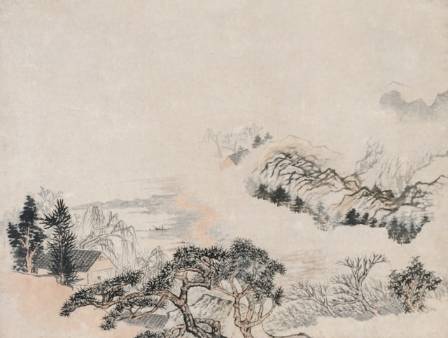
The Song Dynasty witnessed Shui Mo Painting reaching unprecedented heights of artistic refinement and philosophical depth, solidifying its status as a cornerstone of Chinese art. This period saw two parallel developments that shaped the art form: the establishment of imperial art academies and the rise of literati painting. The Song imperial court recognized the importance of art in promoting cultural identity and moral values, founding the Imperial Academy of Painting to train artists in rigorous technical standards. Academy painters focused on realism and precision, using fine brushwork and meticulous attention to detail to depict landscapes, birds, flowers, and figures. Their works were characterized by their technical mastery, vibrant compositions, and adherence to traditional norms, often commissioned by the imperial family and aristocracy. In contrast, literati painting (wenren hua) emerged as a counterpoint to academic art, created by scholars and intellectuals who viewed painting as a form of self-expression rather than a professional career. Literati artists, who were well-versed in Confucianism, Taoism, and Buddhism, used Shui Mo Painting to convey their personal ideals, moral values, and emotional states. They favored themes such as bamboo (symbolizing integrity), plum blossoms (representing resilience), and landscapes (evoking harmony with nature), using loose, spontaneous brushwork and minimal ink to capture the essence of their subjects. One of the most influential literati artists of the Song Dynasty was Mi Fu, along with his son Mi Youren, who founded the “Mi School” of painting. Their signature style involved using ink blots (dian cun) and horizontal strokes to depict misty mountains and clouds, creating a dreamy, abstract quality that emphasized atmosphere over realism. This innovative approach revolutionized Shui Mo Painting, inspiring generations of artists to embrace abstraction and emotional expression. The Song Dynasty also saw advancements in ink production, with high-quality pine soot ink becoming widely available, allowing artists to achieve richer blacks and more nuanced shades. Together, academic and literati painting made the Song Dynasty a golden age for Shui Mo Painting, setting standards of excellence that would influence Chinese art for centuries.
Continuation in the Yuan Dynasty (1271 - 1368 AD): Nostalgia and Artistic Revival
The Yuan Dynasty, a period when China was ruled by the Mongol Empire, brought significant political and cultural changes, yet Shui Mo Painting continued to thrive as a powerful medium of cultural preservation and expression. Many Han Chinese artists, disillusioned by foreign rule, retreated from public life and turned to art as a way to express their nostalgia for the Tang and Song Dynasties and their devotion to traditional Chinese culture. This period saw a revival of classical techniques, with artists drawing inspiration from the masters of previous eras while infusing their work with personal emotion and cultural pride. A key figure in this revival was Zhao Mengfu, a versatile artist, calligrapher, and scholar who advocated for the integration of calligraphic brushwork into painting. He believed that painting and calligraphy shared the same artistic roots, and his works featured bold, fluid brushstrokes that reflected his mastery of both disciplines. Zhao Mengfu’s style was characterized by its elegance, simplicity, and refinement, blending the realism of the Song academic tradition with the spontaneity of literati painting. He also promoted the idea of “yi zai xing wai” (spirit beyond form), emphasizing that a painting’s true value lay in its ability to convey the artist’s inner spirit rather than its literal accuracy. Other prominent Yuan artists, such as Huang Gongwang, Wu Zhen, Ni Zan, and Wang Meng (known as the “Four Masters of the Yuan Dynasty”), further developed the literati painting tradition, focusing on landscape themes that symbolized their desire for spiritual freedom and detachment from political turmoil. Their works featured sparse compositions, subtle ink tones, and a sense of quiet contemplation, embodying the Taoist ideal of harmony with nature. Despite the political challenges of the era, the Yuan Dynasty proved to be a crucial period for Shui Mo Painting, preserving its traditional essence while laying the groundwork for future innovations.
Diversification in Ming and Qing Dynasties (1368 - 1912 AD): School Styles and Creative Freedom
The Ming and Qing Dynasties marked a period of great diversification in Shui Mo Painting, with the emergence of numerous regional schools and artistic styles, each with its own unique characteristics and philosophy. The Ming Dynasty saw the rise of the Wu School (centered in Suzhou), which was influenced by the literati painting tradition of the Yuan Dynasty. Artists of the Wu School, such as Shen Zhou, Wen Zhengming, Tang Yin, and Qiu Ying (known as the “Four Masters of the Wu School”), focused on landscape and flower painting, using delicate brushwork, soft ink tones, and elegant compositions to convey a sense of tranquility and refinement. Their works were often infused with poetic inscriptions, reflecting the close connection between poetry, calligraphy, and painting in Chinese art. In contrast, the Qing Dynasty witnessed the emergence of several distinct schools, including the Yangzhou School and the Shanghai School. The Yangzhou School, active in the 18th century, was known for its bold, free-spirited style and unconventional themes. Artists such as Zheng Banqiao, Jin Nong, and Huang Shen (members of the “Eight Eccentrics of Yangzhou”) rejected the rigid norms of academic painting, instead embracing spontaneity, individuality, and social commentary. Their works featured bold brushstrokes, vivid colors, and subjects drawn from everyday life, such as bamboo, flowers, and ordinary people, reflecting a shift toward more accessible and relatable art. The Shanghai School, which emerged in the 19th century, was influenced by both traditional Chinese art and Western culture, as Shanghai became a major port city and center of international trade. Artists of the Shanghai School, such as Ren Bonian and Wu Changshuo, combined traditional ink wash techniques with Western perspective and color theory, creating works that were both innovative and rooted in tradition. They also experimented with new subjects, such as urban landscapes and modern figures, reflecting the changing social and cultural landscape of late Qing China. Throughout the Ming and Qing Dynasties, Shui Mo Painting continued to evolve, adapting to changing times while maintaining its core principles, and its diverse styles reflected the rich cultural tapestry of China during this period.
Modern Evolution: Blending Tradition with Innovation
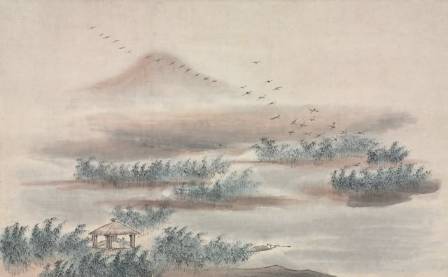
In the modern era, Shui Mo Painting has undergone a remarkable transformation, adapting to global cultural exchanges while preserving its traditional essence. The 20th century saw Chinese artists exposed to Western art movements such as impressionism, cubism, and abstract expressionism, which inspired them to experiment with new techniques, materials, and themes. Contemporary Shui Mo artists have embraced a wide range of innovations, from incorporating acrylics and mixed media into their work to using digital tools to create ink wash effects. Yet, despite these modern influences, the core principles of Shui Mo Painting—simplicity, subtlety, and the expression of inner spirit—remain intact. One of the key developments in modern Shui Mo Painting is the fusion of traditional techniques with contemporary themes. Artists today address issues such as environmental protection, urbanization, and cultural identity, using ink and water to convey their perspectives on the modern world. For example, some artists use bold, abstract ink strokes to depict the chaos and energy of modern cities, while others use delicate brushwork to highlight the beauty of nature in an increasingly industrialized society. Additionally, modern artists have expanded the boundaries of the art form by experimenting with new mediums, such as large-scale installations, performance art, and digital projections, bringing Shui Mo Painting to new audiences and contexts. Internationally, Shui Mo Painting has gained widespread recognition, with exhibitions in major museums and galleries around the world, fostering cross-cultural dialogue and appreciation. Despite these innovations, many contemporary artists remain deeply rooted in traditional techniques, studying the works of ancient masters and preserving the art form’s rich heritage. This balance between tradition and innovation ensures that Shui Mo Painting remains a vibrant and relevant art form in the 21st century.