← वर्कस्पेस5 मिनट
नोट
The Most Surprising History of Your Feline Friend
Have you ever considered that just a hundred years ago, it was rare for a cat to live its entire life inside a house? For over ten millennia, cats have led outdoor existences, coexisting with birds and other wildlife. Exploring the cat's role in our shared past reveals how recently the practice of keeping cats indoors began, and explains why millions of domestic cats—often called community cats—continue to thrive outdoors today, a lifestyle to which they are naturally suited.
M
Mark Allen
लेखक
मेटा
संदर्भ फील्ड नीचे उपलब्ध।
टाइप
पल्स नोट
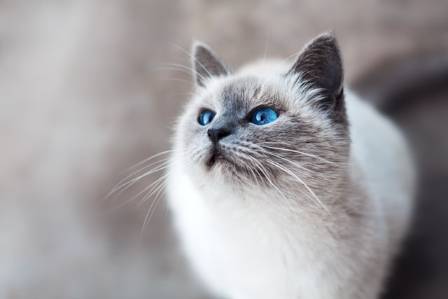
Have you ever considered that just a hundred years ago, it was rare for a cat to live its entire life inside a house? For over ten millennia, cats have led outdoor existences, coexisting with birds and other wildlife. Exploring the cat's role in our shared past reveals how recently the practice of keeping cats indoors began, and explains why millions of domestic cats—often called community cats—continue to thrive outdoors today, a lifestyle to which they are naturally suited.
The Dawn of the Domestic Feline
The unique partnership between cats and humans started 10,000 to 12,000 years ago in the Fertile Crescent, a region renowned for the dawn of human civilization, located in parts of modern West Asia. Here, the birth of agriculture led people to abandon nomadic life and establish permanent settlements. Their stored grain, in turn, attracted rodents.
Middle Eastern wildcats (Felis silvestris lybica) seized this new opportunity. By hunting these rodents and scavenging from the waste of early human towns—much like community cats do today—they found a reason to stay. Over thousands of years, a new species evolved that naturally lived in proximity to people: Felis catus. Today's pet cats, strays, and feral cats all belong to this same species, the domestic cat.
Felines Circle the Globe
Cats established a mutually beneficial arrangement with humans, a relationship some scientists believe they initiated themselves. Highly valued for controlling rodents on ships, cats journeyed across the world with people:
The earliest proof of this close association was found in Cyprus, where a burial site from 9,500 years ago shows a cat intentionally buried with a human.
In ancient Egypt, cats were revered, mummified, and even adorned with gold jewelry to reflect their owner's social standing.
When Egypt became part of the Roman Empire in 31 BC, cats were integrated into Roman society, becoming common throughout Europe by the 4th century AD. A cat skeleton from this era already shows the distinctive shortened skull of modern domestic cats.
Geoffrey Chaucer referenced a cat door in The Canterbury Tales in the 1380s.
Cats sailed from Europe to the Americas, reportedly accompanying Christopher Columbus, the Jamestown settlers, and the passengers of the Mayflower.
Their utility as mousers continued into modern times, with cats even serving as official employees of the United States Postal Service in the 19th and early 20th centuries.
By the late 1800s, Americans began valuing cats for companionship beyond their practical use. The first official cat show was held at Madison Square Garden in 1895. Following World War I, cats were widely embraced as household pets in the United States.
Throughout this long history, cats moved freely in and out of human dwellings. Even President Calvin Coolidge's cat in the 1920s was allowed to roam from the White House. As Sam Stall, author of books on feline history, notes, “In Coolidge’s day, no one considered confining cats indoors—not even the president’s cat.”
Creating the Indoor Cat: A Modern Invention
The concept of a permanently indoor cat only became feasible with key 20th-century advancements: refrigeration, commercial cat litter, and accessible spaying and neutering.
While these modern conveniences make indoor life possible, cats themselves are biologically identical to their ancestors from thousands of years ago. Their function in our society has expanded, but their fundamental instincts and needs remain unchanged.

Commercial Cat Food
Dogs have been physically shaped by domestication and adapted to an omnivorous diet. Cats, however, have changed very little and still require a diet high in protein. Before the advent of refrigeration and canned cat food, sustaining an indoor cat that couldn't hunt would have been impractical for most households, who could not spare fresh meat or fish.
The Litter Box Revolution
Until the mid-20th century, American cats roamed freely, using the outdoors as their restroom. While some owners used pans filled with dirt or newspaper indoors, the widespread use of litter boxes began after the accidental discovery of clay litter in 1947 and the subsequent marketing of brands like Tidy Cats® in the 1960s. This invention catapulted the cat's popularity as an indoor companion, even though their ability to survive outdoors remains intact.
Spaying and Neutering
Before spaying and neutering became widely available and safe for pets around the 1930s, keeping unaltered cats indoors during mating season was a challenge. Just as they found their own food and bathroom areas outdoors, cats continued to breed and give birth outside, as they had for millennia.
While the kittens of outdoor cats can sometimes be socialized and adopted into homes if found young enough, many cats live their entire lives outdoors. Although adult community cats are typically not suited to become indoor pets, spaying or neutering them and returning them to their outdoor home (a practice known as TNR) significantly improves their welfare.
Cats Belong in Our World
In the vast timeline of human-feline coexistence, keeping cats exclusively indoors has been common for a mere 60 to 70 years—a blink of an eye in evolutionary terms.
Cats have always lived and flourished outdoors. Only recently have we used sterilization, canned food, and litter boxes to bring them inside and replicate the outdoors for them. The population of community cats was not created by humans; they are a natural part of our environment, not simply a product of lost pets or owner neglect.
Community cats have a right to live outdoors, just as they have for thousands of years. For cats not socialized to humans, an indoor home would be a frightening and stressful prison. The outdoors is their home, and like squirrels, raccoons, and birds, they are well-adapted to it.
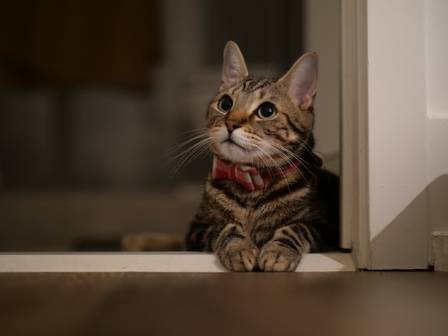
Acknowledging this reality is the first step to helping them. TNR is a compassionate response. Just as people put out bird feeders and houses to support wildlife, many individuals provide food and shelter for community cats. Through TNR, we go a step further by sterilizing them and providing vaccinations.
This approach benefits both the cats and the human communities they live in. The public generally opposes rounding up and killing cats and prefers to see populations stabilized and the problematic behaviors of intact cats reduced. TNR represents sound public policy—a balanced, humane strategy for improving coexistence between outdoor cats and people in our shared environment. This is why countless cities are adopting it. TNR stabilizes cat populations, reduces municipal complaints about cats, cuts down on shelter euthanasia rates, and saves taxpayer money.