नोट
Fascinating and Unique Insights Into the World of Penguins
Penguins are among the most recognizable and intriguing birds on the planet. While they are often associated with the icy landscapes of the poles, their history, biological adaptations, and social behaviors reveal a much more complex and surprising story.
Shane Langston
लेखक
मेटा
संदर्भ फील्ड नीचे उपलब्ध।
टाइप
पल्स नोट
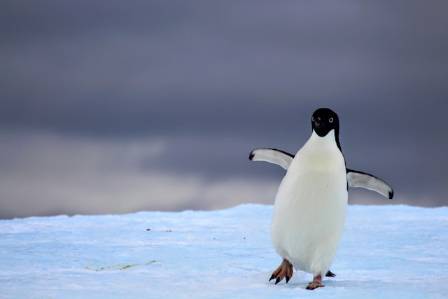
Penguins are among the most recognizable and intriguing birds on the planet. While they are often associated with the icy landscapes of the poles, their history, biological adaptations, and social behaviors reveal a much more complex and surprising story.
Ancient Origins and Evolutionary Changes
Evidence from the fossil record indicates that penguins have a history stretching back approximately 62 million years, appearing shortly after the era of the dinosaurs. Scientists believe that the ancestors of modern penguins once possessed the ability to fly. However, as they evolved to exploit the rich resources of the ocean, their bodies adapted for aquatic life. They traded their aerial capabilities for powerful, paddle-like flippers, eventually becoming the most proficient swimmers and deepest divers in the avian world.
Masterful Survival and Biological Adaptations
Penguins possess several specialized traits that allow them to thrive in extreme environments. To stay hydrated in areas where fresh water is scarce, they use a supraorbital gland located near their eyes to filter salt out of the seawater they consume. Their distinctive black-and-white appearance, known as countershading, serves as a vital camouflage technique; a dark back blends into the deep ocean when viewed from above, while a white belly mimics the bright surface of the water when seen from below.
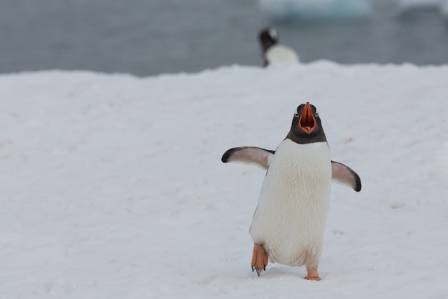
Temperature regulation is another area of biological excellence. Emperor penguins, for instance, survive temperatures as low as -60°C by utilizing thick layers of fat and dense feathers. They also exhibit cooperative social behavior, huddling in massive groups to share body heat and rotating individuals from the cold outer edges to the warm center of the pack.
Remarkable Parenting and Social Behavior
In the penguin world, parenting is often a shared or even reversed responsibility compared to many other animals. Among Emperor penguins, the male takes on the primary role of protecting the egg during the brutal winter while the female travels to find food. These males are even capable of producing a specialized nutrient-rich substance to sustain the chicks until the mother returns.
Most penguin species rely on their voices for social organization. In a colony that may contain thousands of birds, individuals can recognize the unique vocal signatures of their partners and offspring, ensuring families stay together in the noise and chaos of a crowded nesting ground.
Diversity Across the Species
There are 17 distinct species of penguins, all of which reside in the Southern Hemisphere. While some live on the frozen shores of Antarctica, others thrive in much warmer climates. For example, the Galápagos penguin lives near the equator, while African penguins occupy the coastal regions of Namibia and South Africa.
The physical differences between these species are vast. The Little Penguin, often called the "blue penguin," stands only about 30 centimeters tall and is primarily nocturnal on land to avoid predators. In contrast, the Emperor Penguin can reach heights of 1.3 meters. Speed also varies; the Gentoo penguin is the fastest of all, capable of reaching underwater speeds of 36 km/h, which is four times faster than a human Olympic swimmer.
The Challenges of Penguin Life
One of the most physically demanding periods for a penguin is the "catastrophic molt." Unlike other birds that replace feathers gradually, penguins lose their entire coat at once. During this time, they lose their waterproof insulation and cannot enter the water to hunt. To survive, they must gorge themselves on food beforehand and rely on stored fat for several weeks while their new feathers grow in.
Penguins are also subject to the pressures of a high-speed metabolism. Their efficient digestive systems require them to eat and excrete waste frequently—sometimes as often as every 20 minutes—to maintain the energy levels needed for their deep-sea hunting expeditions.
Profiles of Resident Species
The King Penguin is the second-largest species and is easily identified by its vibrant orange neck patches. They are unique for not building nests; instead, they balance their single egg on their feet to keep it off the cold ground.
The Gentoo Penguin is recognized by a white stripe across its head and a bright orange beak. These birds are known for their curiosity and incredible agility, frequently diving to depths of 200 meters to catch fish and krill.
The Little Penguin remains the smallest in the family, weighing only about one kilogram. Found along the coasts of Australia and New Zealand, their blue-grey feathers provide a unique aesthetic compared to their larger, black-and-white relatives.
संबंधित

The Bean (Cloud Gate) in Chicago

Why Horses Make Exceptional Companions: Unveiling the Joys of Equine Friendship

दुनिया के 12 बेहतरीन बास्केटबॉल कोर्ट

पहाड़ों में सुरक्षित और आरामदायक यात्रा के लिए ज़रूरी सुझाव
शीर्ष 10 फार्म पशु