नोट
The Story of the Microchip and How a Tiny Device Changed the World
The microchip is tiny. It is often smaller than a fingernail. Yet it powers almost everything in our digital world. Simple gadgets and huge supercomputers both rely on it. Its journey began as a bold concept. It grew into the most vital element of modern technology. This transformation took over half a century. It is a story of vision, fierce competition, and massive global impact.
Alexander Turner
लेखक
मेटा
संदर्भ फील्ड नीचे उपलब्ध।
टाइप
पल्स नोट
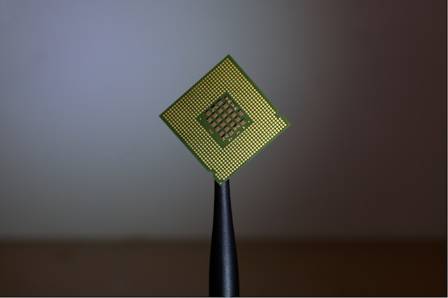
The microchip is tiny. It is often smaller than a fingernail. Yet it powers almost everything in our digital world. Simple gadgets and huge supercomputers both rely on it. Its journey began as a bold concept. It grew into the most vital element of modern technology. This transformation took over half a century. It is a story of vision, fierce competition, and massive global impact.
Visionary engineers turned a complex theory into everyday reality. Microchips now touch every single part of human life. This story goes beyond silicon and wires. It reveals what happens when human curiosity and hard work unite.
The Foundation of Early Electronics
Before integrated circuits existed, electronic devices used separate parts. Engineers call these discrete components. Every component performed a specific job in the system.
Resistors controlled the flow of electric current. They managed electrical pathways inside circuits. They adjusted signal levels and divided voltage. Almost every early electronic device needed them.
Capacitors stored electrical energy. They filtered and stabilized electrical signals. They were critical for timing and signal coupling. They shaped how circuits processed information.
Inductors also stored energy. However, they used magnetic fields instead of electric charges. They smoothed out voltage fluctuations. They helped create filters for radio equipment. They also enabled stable electronic oscillators.
Transformers adjusted voltage levels. They kept electronic devices safe and efficient. They transferred electrical power between circuit stages without direct wiring. Power supplies and sound equipment depended heavily on them.
The Pivotal Role of Vacuum Tubes
Vacuum tubes were central to early electronic progress. People also called them valves. They played a massive role in early systems.
Radios and televisions relied on vacuum tubes. The tubes amplified sound and visual signals. Broadcasting could not exist without them. They enabled the delivery of entertainment to homes.
Audio amplifiers also used these tubes. They boosted sound signals in public speaker systems. Home audio gear depended on them as well.
Early computers used thousands of vacuum tubes. The tubes controlled and boosted electronic signals. They performed crucial calculation tasks. They made pioneer computing machines possible.
Major Milestones in Microchip Development
The timeline of microchip innovation is full of breakthroughs. Each discovery changed the electronic landscape. These advancements built our modern digital ecosystem.
Engineers at Bell Labs invented the transistor in nineteen forty-seven. This breakthrough replaced bulky vacuum tubes. It made smaller electronics possible for the first time.
Jack Kilby built the first working integrated circuit at Texas Instruments in nineteen fifty-eight. His discovery created the foundation for future microchips.
Robert Noyce developed the monolithic integrated circuit in nineteen fifty-nine. He co-founded Fairchild Semiconductor and Intel. His design allowed factory mass production.
NASA adopted microchips heavily between nineteen sixty-one and nineteen sixty-five. Space exploration required light and reliable parts. NASA funding boosted microchip development significantly.
Intel launched the four thousand four microprocessor in nineteen seventy-one. It was the first commercial single-chip central processor. It changed computing forever.
Footwear makers even built microchips into running shoes in nineteen eighty-four. This showed that microchips belonged in consumer goods beyond computers.
By the late twentieth century, microchip technology expanded rapidly. Components became smaller and more efficient. Microchips spread into almost every electronic tool. Today they power smartphones, power grids, and global infrastructure.
Obstacles of the Pre-Microchip Era
Early electronics faced huge obstacles despite initial success. Engineers needed smaller and more reliable components.
Discrete components were easy to solder manually. Hobbyists could build basic circuits by hand. However, these parts were too large for portable gear. Size constraints limited product design.
Vacuum tubes created huge problems. They were heavy and fragile. They required large amounts of electricity. High power usage hurt efficiency and limited portability.
Early computers suffered greatly from these drawbacks. They were gigantic machines. They occupied whole building floors. They consumed hundreds of kilowatts of electricity. Operating them was extremely expensive. Tubes burned out constantly. Finding and replacing broken tubes was a daily nightmare.
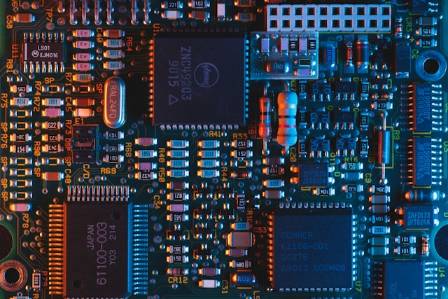
Printed circuit boards improved layout organization. They allowed tighter placement of parts. Yet circuits remained big and heavy. Manual assembly was still necessary. Wave soldering helped mass production, but discrete parts still restricted circuit complexity.
Why Miniaturizing Early Components Was So Difficult
Shrinking early electronic components was nearly impossible due to physical laws.
Vacuum tubes were built by hand. They relied on delicate internal grids and electric fields. Shrinking their physical size altered their electrical traits. Machines capable of making tiny tubes did not exist. Manufacturing tiny tubes required precision tools that only microchips could control. Tubes also required an internal vacuum. Creating tiny vacuum chambers by hand was technically impossible.
Resistors and capacitors faced physical limits too. Their performance depends directly on physical size. Reducing a resistor size cuts its power capacity. Shrinking a capacitor reduces its storage capacity or voltage limit. Engineers could not shrink these parts without losing performance.
The Transistor Revolution
The transistor created a massive shift in electronics. It enabled smaller and more efficient devices.
Semiconductor research started in the early nineteen hundreds. Early radio receivers used simple crystal detectors. However, semiconductor uses remained limited for decades.
Bell Labs changed everything under the leadership of William Shockley. Researchers made two critical breakthroughs. They invented the point contact transistor in nineteen forty-seven. This was the first semiconductor device that used one current to control another. They developed the bipolar junction transistor in nineteen forty-eight. This refined design improved circuit reliability.
Transistors quickly replaced vacuum tubes. They were much smaller. Material and manufacturing costs were low. Power consumption dropped sharply. Transistors created the foundation for integrated circuits.
From Concept to Practical Microchips
Engineers wanted to put entire circuits onto a single semiconductor crystal. Early attempts failed frequently.
Jack Kilby created a breakthrough in nineteen fifty-eight. He built a hybrid integrated circuit at Texas Instruments. The American military showed interest. However, Kilby's design had flaws. The manufacturing failure rate was high. Parts needed delicate gold wires to connect together. This made assembly difficult and costly.
Robert Noyce solved these problems in nineteen fifty-nine. He invented the monolithic integrated circuit at Fairchild Semiconductor. Noyce placed all components onto a single silicon chip. He used a planar manufacturing process created by Jean Hoerni. Aluminum lines connected components directly on the chip. This design was reliable and cheap to mass produce. Noyce created the template for modern microchips.
Early Roadblocks in Microchip Adoption
First-generation microchips faced tough early challenges.
Silicon wafers contained impurities. Cleanroom technology was crude. Factory output yields were very low. Working chips were expensive and sometimes unreliable. High prices kept microchips out of consumer products initially.
NASA stepped in as a major customer. Spacecraft needed lightweight and compact electronics. NASA bought massive quantities of microchips between nineteen sixty-one and nineteen sixty-five. Government funding helped manufacturers refine production methods.
Factory methods improved over time. Silicon yields increased. Chip costs dropped steadily. Reliability improved dramatically. Microchips became commercial successes.
The Rapid Rise of the Microchip Industry
The success of integrated circuits created a massive new industry.
Pioneer companies expanded rapidly. Texas Instruments, Fairchild Semiconductor, and Intel led the market. They competed fiercely to build better chips.
Microchips entered consumer products. Simple timer chips like the five hundred fifty-five timer became popular. Logic gates, drivers, and amplifiers allowed complex signal handling.
Standard chip families emerged. The seventy-four hundred series and four thousand series transformed design. Engineers combined these chips to build complex machines. Computers shrank from whole rooms down to desk size.
The Microprocessor Breakthrough
Early computers used many separate logic chips. Wiring them together was complicated and expensive.
A Japanese calculator company approached Intel in nineteen sixty-nine. They wanted seven specialized chips for a new calculator. Intel engineers Federico Faggin and Marcian Hoff proposed a better idea. They suggested putting a complete central processor onto one single chip. The client accepted the idea, and Intel kept the commercial distribution rights.
Intel launched the four thousand four microprocessor in nineteen seventy-one. It contained twenty-three hundred transistors on a four-bit architecture. It was the first commercial microprocessor.
This success led to the Intel eighty-eighty processor. Personal computer pioneers adopted it quickly. Intel later designed the eighty-eighty-six processor. That design created the famous x eighty-six architecture used in computers today.
Microchips as the Backbone of Modern Society
Modern microchips are engineering marvels.
Advanced chips contain billions of transistors on a tiny piece of silicon. Miniaturization followed Moore's Law for decades. Chips became faster, smaller, and more energy efficient.
Microchips are everywhere today. They power smartphones, laptops, vehicles, home appliances, and medical devices. They run internet routers, banking systems, and power stations.
The microchip industry is now a critical global pillar. It drives world trade and economic growth. Microchip manufacturing has become a major topic in international politics and national security. Countries without chip supplies face severe economic risks.
The Endless Legacy of Silicon Innovation
The journey of the microchip shows human ingenuity at its best. A simple piece of treated silicon transformed global human society. From early vacuum tubes to modern microprocessors, chip technology shapes our present and defines our future.
संबंधित

दुनिया के सबसे खूबसूरत तटीय शहर

The Oceanic Ballerina: Unveiling the Secrets of the Longfin Bannerfish

The Most Beautiful Mountain Villages Around the World

The World's Most Stunning Beaches: A Seaside Escape Like No Other

The Ultimate Guide to Choosing the Perfect Bag for Every Occasion