नोट
Incredible Secrets Behind the Bright Crimson Plumage and Unusual Behaviors of Flamingos
Wading birds are absolutely beautiful creatures that inhabit our planet. They shock observers with their vibrant coloration and unique lifestyles. These tall birds live peacefully across diverse aquatic habitats around the world. They possess a natural talent for navigating harsh environments. Yet many people do not realize the hidden biological traits behind their daily survival. This diverse family of birds holds many fascinating secrets.
Patterson Miles
लेखक
मेटा
संदर्भ फील्ड नीचे उपलब्ध।
टाइप
पल्स नोट
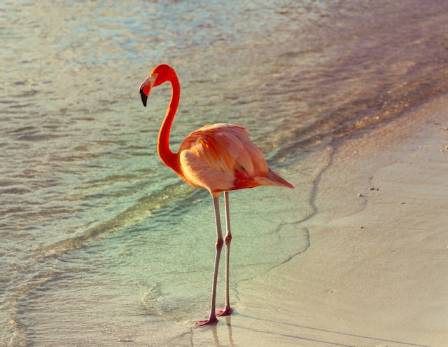
Wading birds are absolutely beautiful creatures that inhabit our planet. They shock observers with their vibrant coloration and unique lifestyles. These tall birds live peacefully across diverse aquatic habitats around the world. They possess a natural talent for navigating harsh environments. Yet many people do not realize the hidden biological traits behind their daily survival. This diverse family of birds holds many fascinating secrets.
Volcanic Mud Nesting Traditions and Young Chicks
The home of these birds looks exactly like a miniature volcano made entirely of wet mud. The specialized structures are built large enough to hold just one single egg. The adult birds choose one partner for life. The mother and father function as excellent teammates during the breeding season. Both parents help to build the earthen mound. They also take turns sitting on the egg to keep it warm. The young chicks hatch out covered in soft white and gray downy feathers. They possess completely straight bills at birth. It takes several years of growth for them to acquire their signature bright color. Their unique hook shaped bills also develop much later in life.
The Chemical Secret Behind Their Vibrant Pink Coloration
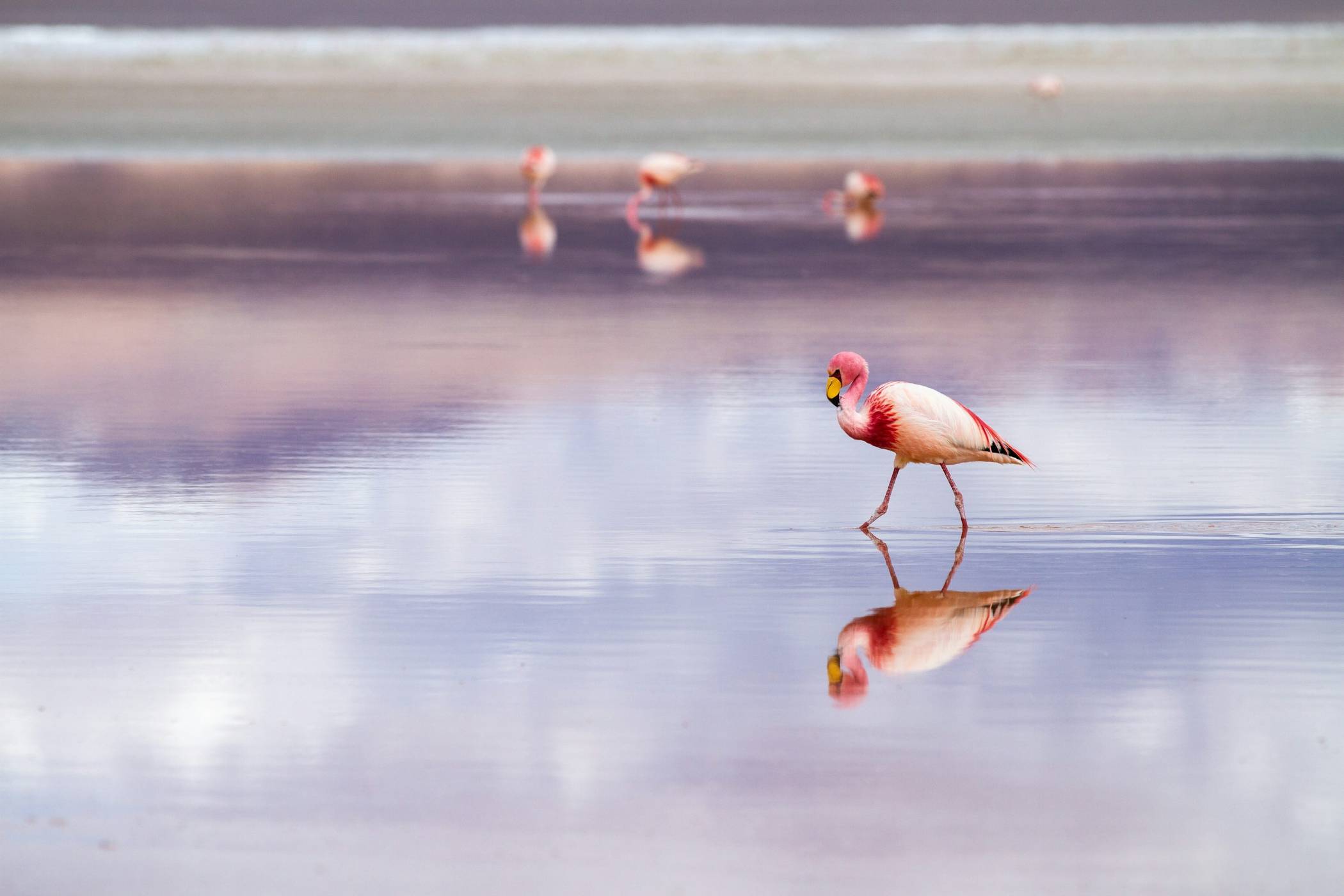
These colorful birds really are a direct reflection of their daily diet. Many aquatic plants naturally produce red and yellow pigments. These natural chemical compounds are called carotenoids. These organic pigments give carrots their bright orange hue. They also turn ripe tomatoes completely red. The exact same compounds are highly concentrated inside microscopic algae. Tiny brine shrimp consume this algae regularly. The birds feed heavily on both the algae and the shrimp. Their bodies metabolize these organic pigments efficiently. This biological process slowly turns their feathers a beautiful shade of pink.
Upside Down Filtering Tactics in Shallow Waters
The concept of a filter feeder usually brings to mind massive baleen whales. However these long legged birds utilize the exact same feeding strategy. They regularly consume aquatic algae and tiny plant seeds. They also eat small crustaceans like brine shrimp and fly larvae. They target a wide variety of plants and animals that thrive in shallow waters. The birds submerge their heads completely upside down when it is time to eat. They point their bills directly backward toward their feet. They sweep their heads from side to side continuously. They use their large tongues to pump water rapidly in and out of their mouths. Small comb like plates line the edge of their bills. These structures act as a perfect filter to let the water escape while trapping the food inside.
The birds maintain their body temperature naturally by standing in open water. They utilize this behavior to keep cool in exceptionally warm climates. They require comfortable water conditions to thrive during the cold winter months. Heated pools help the birds remain perfectly comfortable even when the outdoor weather brings heavy snow.
A Flamboyance of Birds and Large Wild Colonies
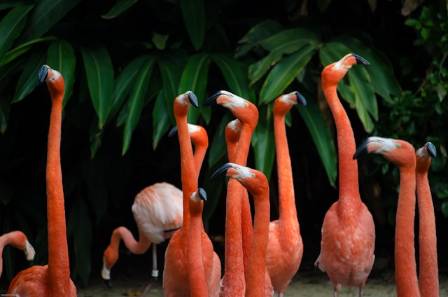
People use unique collective nouns to describe groups of different birds. A gathering of crows is called a murder. A group of geese is officially known as a gaggle. A large gathering of these pink birds is called a flamboyance. People also refer to the group as a stand or a colony. The birds sometimes gather by the thousands in their wild habitats. Scientists estimate that hundreds of thousands of these birds live in the wild today. Large populations thrive across the Bahamas and Cuba. They also live in Mexico and the Southern Caribbean. A small distinct group occupies the isolated Galápagos Islands.
The Six Distinct Species and Global Size Variations
There are six distinct species of these unique birds living across the globe. The family includes the Caribbean variety and the lesser variety. The greater variety represents the largest and tallest species. These large birds live across parts of Africa, Asia, and Europe. Three specific varieties live exclusively in South America. These are the Chilean, Andean, and James's varieties. The Andean variety is the rarest species in the world today. Their total population numbers fewer than forty thousand birds. The lesser variety lives across parts of Africa and southern Asia. They are the smallest but most abundant species. Millions of these small birds brighten the global shorelines with their colorful plumage.
The True Anatomy of Straight Leg Hinging
People often get confused when looking closely at their long limbs. Their leg joints do not actually bend backward. Their legs bend in the exact same direction as human limbs. The visible joint in the middle of their leg is actually an ankle joint. Their actual knees are located much higher up on the leg. The true knees remain completely hidden by their heavy body feathers. The bird is essentially standing permanently on its tiptoes. When the limb bends you are simply seeing the ankle joint hinge.
Survival Tricks Inside Highly Corrosive Soda Lakes
These birds typically occupy shallow saltwater lagoons or brackish environments. However some specialized species breed inside highly concentrated bodies of water. These harsh environments are called alkaline or soda lakes. The intense concentration of carbonate salts makes the water incredibly corrosive. The liquid can easily burn animal skin upon contact. This makes the environment completely uninhabitable for most living creatures. The birds possess a highly specialized physiology that protects them. They have incredibly tough skin on their legs that resists chemical burns. However the high salt content remains dangerous for young chicks. Heavy salt rings can form around their small legs. This makes it completely impossible for the young birds to walk.
The Secret Nutritional Value of Crop Milk Secretions
The adult parents feed their newborn chicks a specialized liquid. This substance is officially called crop milk. The parents manufacture this fluid inside their throat area. They bring the liquid up through their mouths to feed the young. The substance is packed full of healthy proteins and essential fats. Both the mother and the father can produce this nutritious fluid. They feed the chick continuously until the young bird grows old enough to gather food on its own.
Midnight Migrations Across Vast Airborne Distances
People are very accustomed to seeing these birds gathered on the ground. However these creatures are excellent flyers. They regularly take flight to travel to distant breeding grounds. They migrate to new bodies of water as the local seasons change. They also move toward warmer low altitude regions before winter arrives. The birds prefer to travel during the night hours when they must cover long distances.
The Hidden Balancing Act of One Legged Sleep
These birds can balance on a single foot for incredibly long periods of time. They routinely maintain this position even while they are fast asleep. This unique balancing act serves a highly practical purpose. Research suggests that the birds use far more muscle power when standing on both limbs. Resting on a single leg is actually much less tiring for their bodies. Scientists also believe the stance helps them conserve body heat. Birds lose a significant amount of warmth through their exposed limbs. The birds limit the amount of heat escaping into the air by tucking one leg securely beneath their warm bellies.
संबंधित

How to Select the Ideal Lounge Chair
फ्लेमिंगोस गुलाबी क्यों हैं? और अन्य फ्लेमिंगो तथ्य

Which Sofa Are People Choosing in 2025? From Curves to Color, These Are the Top Sofa Trends Designers Recommend to Aid Your Search
Soccer Stadium Trends Include Flexible, Future-Focused Designs

अंतरिक्ष की कल्पना