नोट
Understanding Articulated Robots: Essential Information and Key Insights
The articulated robot is the most prevalent variety of industrial robot used today and is likely the most familiar to the general public. These machines are frequently depicted in media and industrial photography as mechanical arms designed to lift materials, fuse automobile components through welding, or transfer products between assembly lines. Their versatility allows them to serve a wide array of commercial sectors.
Isabella Rose Fairchild
लेखक
मेटा
संदर्भ फील्ड नीचे उपलब्ध।
टाइप
पल्स नोट
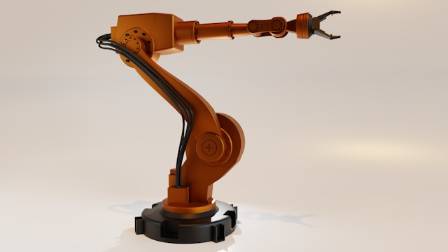
The articulated robot is the most prevalent variety of industrial robot used today and is likely the most familiar to the general public. These machines are frequently depicted in media and industrial photography as mechanical arms designed to lift materials, fuse automobile components through welding, or transfer products between assembly lines. Their versatility allows them to serve a wide array of commercial sectors.
The Design and Mobility of Robotic Arms
Articulated robots feature mechanical arms equipped with revolving joints, providing them with extensive reach and the agility required for diverse operations. The structure of these arms closely mimics human anatomy, incorporating segments that function similarly to shoulders, elbows, and wrists, and occasionally even digital appendages like fingers. These pivot points are technically referred to as axes.
While a single machine can possess up to ten axes, the six-axis model is the industry standard. This configuration allows the robot to reach any specific coordinate within its workspace through coordinated and fluid movement. A significant benefit of this design is spatial efficiency; these robots can utilize nearly the entire volume of their operational area. Their only real spatial limitation is typically the small footprint behind the base where power and control wiring are situated.
Primary Applications and Performance Advantages
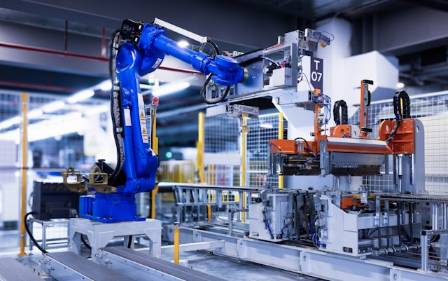
These robots are exceptionally effective for tasks such as assembly, packaging, material handling, welding, and sorting. Their multi-directional mobility makes them highly flexible and capable of adapting to updates or changes in the production environment. Furthermore, articulated robots offer superior reliability compared to conventional, non-robotic manufacturing setups.
The high level of precision and repeatability inherent in these systems ensures that every task follows a programmed trajectory without deviation. This results in uniform products with fewer defects, thereby enhancing overall output quality. Additionally, production schedules become more stable and predictable because robots can function non-stop without the need for pauses. By reducing human error, material loss, and production time, these reliable methods help stabilize or even lower operational expenses.
Technical Constraints and Operational Considerations
Despite their many benefits, articulated robots do face certain limitations, particularly regarding operational velocity. They generally cannot compete with the sheer speed of specialized robotic systems designed for rapid-fire tasks. This is largely due to their sophisticated joint structures, which require complex mathematical calculations to coordinate movement. Additionally, the physical mass of their components creates significant inertia, which must be managed every time the arm changes its direction of travel.
For decades, the integration of these systems has been a cornerstone of industrial innovation, particularly within specialized sectors like plastics manufacturing. Modern automation solutions are typically custom-engineered to fit specific applications, ranging from standalone robotic tools to comprehensive, turnkey manufacturing systems. These high-quality robotics are sourced from various leading global manufacturers to ensure they meet the specific needs of the facility.
संबंधित

Botanical Illustration Guide: Sketching a Detailed Maple Leaf

शुरुआती लोगों के लिए रग्बी पर टिप्स: स्किल्स, फिटनेस और गेम की समझ बनाना

दुनिया के 8 बेहतरीन वन गृह

कुमुदनी का फूल अर्थ: प्रतीकवाद, रंग, और महत्व

आपके बगीचे को रोशन करने के लिए 13 सबसे रंगीन डेज़ी