नोट
Most Famous Waterfall Paintings
Waterfalls are some of the most breathtaking natural wonders on Earth. Across all continents, they have served as significant landmarks and symbols of the immense power of nature.
Echo Winters
लेखक
मेटा
संदर्भ फील्ड नीचे उपलब्ध।
टाइप
पल्स नोट
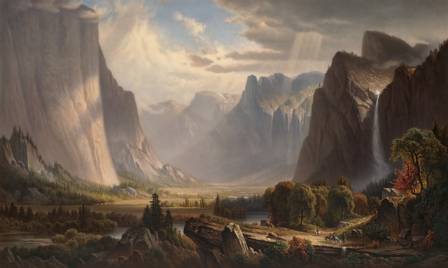
Waterfalls are some of the most breathtaking natural wonders on Earth. Across all continents, they have served as significant landmarks and symbols of the immense power of nature.
Artists have drawn inspiration from waterfalls for centuries. By the mid-19th century, landscape painting had become a popular way to capture the natural world, with many artists focusing on the world’s most magnificent waterfalls.
The following are some of the most iconic waterfall paintings in history, highlighting the artists’ interpretations and motivations.
1. Niagara – Frederic Edwin Church
Niagara Falls is one of the most famous natural spectacles, attracting millions of visitors each year. Its immense scale makes it challenging to capture accurately in either painting or photography.
In 1857, American landscape painter Frederic Edwin Church created Niagara, which cemented his reputation as a master of the genre. Critics and historians widely consider this work the finest artistic depiction of the falls.
Church portrays the Horseshoe Falls, the largest of Niagara’s three waterfalls, with dramatic cloud formations directing the viewer’s attention toward the cascading water. He also captures the rainbow effect created by the mist, enhancing the painting’s realism and grandeur.
2. Cascade Falls, Yosemite – Thomas Moran
Thomas Moran, a prominent American landscape artist and member of the Hudson River School, focused on the raw beauty of North American wilderness.
In 1905, he painted Cascade Falls, Yosemite, featuring a closer, detailed side view of the waterfall rather than the distant perspectives commonly seen today. This painting highlights the intricate textures and movement of water, making it one of the most celebrated waterfall depictions in American art.
3. A Waterfall in a Rocky Landscape – Jacob van Ruisdael
Dutch Golden Age painter Jacob van Ruisdael is regarded as one of the greatest landscape artists in history.
During the 1650s, he produced several waterfall paintings inspired by sites in Germany or Scandinavia. A Waterfall in a Rocky Landscape, completed in the early 1660s, is praised for its detailed depiction of rushing water, setting it apart from other 17th-century landscapes.
4. The Waterfall – Franz Marc
German Expressionist Franz Marc, renowned for his abstract depictions of nature and animals, created The Waterfall, an unusual waterfall painting.
The work portrays nude women resting beside a waterfall, rendered with vivid, contrasting colors that create a captivating, abstract composition. Marc’s use of color and form evokes a dreamlike, emotional response from the viewer.
5. Tivoli with the Temple of the Sybil and the Cascades – Joseph Mallord William Turner
Turner, one of 19th-century England’s greatest painters, excelled in various landscape styles.
In 1797, he painted this iconic view of Rome’s Tivoli, including its famous waterfalls and the Temple of Sybil. The waterfalls dominate the composition, while the temple and surrounding structures remain subtle, reflecting Turner’s ability to emphasize natural grandeur.
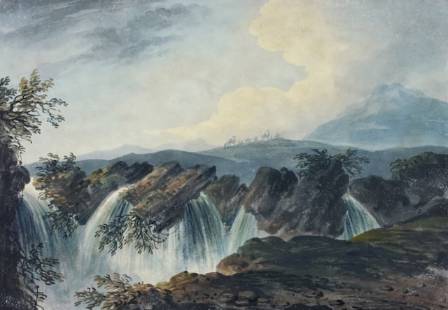
6. Shenandoah River – Thomas Moran
The Shenandoah River region in eastern United States is known for its rugged beauty.
In 1900, Moran painted Shenandoah River, showing the river beneath dark, looming rain clouds—a hallmark of his landscape style. The painting reflects Turner’s influence on Moran, particularly in the use of color and composition for depicting waterways and waterfalls.
7. Sadak in Search of the Waters of Oblivion – John Martin
English painter John Martin gained fame for dramatic, large-scale landscapes, real or imagined.
His 1812 oil painting Sadak in Search of the Waters of Oblivion illustrates the fictional character Sadak from James Ridley’s Tales of the Genii. The work conveys a sense of overwhelming natural forces through vast space and bold color, emphasizing the epic scale of the character’s journey.
8. The Cascades of Tivoli – Claude-Joseph Vernet
French painter Claude-Joseph Vernet was celebrated for detailed landscape paintings in the 18th century.
Around 1750, while living in Rome, he painted The Cascades of Tivoli, showing the famous waterfalls near the Temple of Sybil. Vernet often depicted humans as tiny figures against the grandeur of nature, emphasizing the dominance of the natural world.
9. The Falls of St. Anthony – Albert Bierstadt
Born in Germany but prominent in America, Bierstadt became famous for his Hudson River School landscapes, depicting the untamed American frontier.
Completed in 1880, The Falls of St. Anthony portrays the waterfall as it appeared before human alteration. Bierstadt emphasizes the sweeping river and the sacred significance of the site to Native American tribes, blending realism and romanticism.
10. Casting in the Falls – Winslow Homer
Winslow Homer, a leading American realist, often depicted Eastern U.S. landscapes.
Casting in the Falls (1889) shows a fisherman casting his line into a small waterfall, likely in the Adirondacks. The work captures the serene interaction between humans and nature, earning recognition as a notable 19th-century waterfall painting.
11. Waterfall Series – Hiroshi Senju
Contemporary Japanese artist Hiroshi Senju is known for highly realistic waterfall paintings.
His Waterfall Series often adorns doors, walls, and large-scale murals. Senju uses traditional techniques, grinding natural minerals into pigments to capture the movement and mist of cascading water. His works evoke the sound and feel of waterfalls, creating a meditative and philosophical experience for viewers.
These masterpieces demonstrate not only the awe-inspiring beauty of waterfalls but also the enduring fascination of artists with the power, movement, and symbolism of water in nature.
संबंधित
लाल गुलाब प्रेम और रोमांस का प्रतीक हैं। पेश है लाल फूलों वाले गुलाबों की हमारी पसंदीदा किस्में।

Identifying the Most Comfortable Seating for Sustained Use

7 Denim Staples Every Woman Needs in 2025
शुरुआती लोगों के लिए 10 आसान चित्र
Best Luxury Cars You Can Buy Right Now