नोट
The Bald Eagle’s Recovery A Triumph in Conservation Efforts
With its grand, soaring figure cutting across the sky, the bald eagle has served as the national symbol of the United States for over 240 years. Beyond its symbolic role, it also stands as a powerful example of how the Endangered Species Act can pull wildlife back from the edge of extinction. This iconic bird is not just a representation of national pride but a testament to what dedicated conservation work can achieve.
Samuel Wright
लेखक
मेटा
संदर्भ फील्ड नीचे उपलब्ध।
टाइप
पल्स नोट

With its grand, soaring figure cutting across the sky, the bald eagle has served as the national symbol of the United States for over 240 years. Beyond its symbolic role, it also stands as a powerful example of how the Endangered Species Act can pull wildlife back from the edge of extinction. This iconic bird is not just a representation of national pride but a testament to what dedicated conservation work can achieve.
The Bald Eagle’s Traits and Cultural Significance
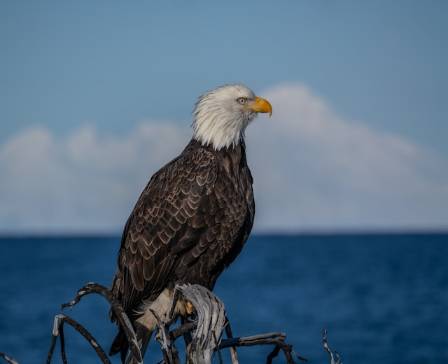
The bald eagle is the only eagle species native exclusively to North America. Classified as a sea eagle, its diet primarily consists of fish, though it also feeds on waterfowl, small mammals, and carrion. You can spot these birds in wetland areas, near rivers and lakes, or along coastlines throughout North America. Adult bald eagles have an impressive wingspan ranging from 72 to 90 inches (182–228 cm) and weigh between 10 and 14 pounds (4.5–6.4 kg), making them one of the largest birds of prey that live permanently in North America (only the California condor is larger). The name “bald eagle” comes from the Old English word “balde,” which means “white-headed”—a reference to the distinctive white feathers on the bird’s head.
For thousands of years, the bald eagle has held deep cultural importance for Native American communities. Its role as a symbol of the United States began during the American Revolution, and in 1782, it officially became the nation’s symbol. Back in the 18th century, it’s estimated that there were as many as 500,000 bald eagles across North America. But by the 1950s, their numbers had plummeted drastically, with only 412 nesting pairs left in the lower 48 states.
Threats to the Bald Eagle Population
Even though the bald eagle was a national symbol, it faced widespread public misunderstanding. Many people incorrectly believed that eagles killed lambs and other young livestock—and even that they attacked small children. This false perception led to heavy persecution of the birds, contributing to their decline in the U.S. Another major problem was the loss and fragmentation of the wetland habitats that bald eagles prefer, as these areas are crucial for their feeding and nesting.
Early Protection Measures and the DDT Crisis
In 1918, the bald eagle received some level of protection under the Migratory Bird Treaty Act (MBTA). Then, in 1940, as the threat of their extinction grew more urgent, Congress passed the Bald Eagle Protection Act (later updated to become the Bald and Golden Eagle Protection Act). This law banned the killing of eagles and the taking of their eggs. Unfortunately, the widespread use of the pesticide DDT in the 1940s and 1950s caused a devastating decline in eagle populations—and the populations of many other bird species. One of the harmful effects of DDT was that it thinned the eggshells of birds like bald eagles, leading to a high rate of chick mortality as the fragile eggs often broke before hatching.
Rachel Carson’s famous book Silent Spring brought widespread attention to the dangers that DDT posed to both humans and wildlife. Thanks to pressure from the public and scientists, the use of DDT in agriculture was banned in the U.S. in 1972, a key step toward protecting the bald eagle.
Listing Under Endangered Species Laws and Recovery Initiatives
In 1967, the bald eagle population in the U.S. south of the 40°N parallel (which includes eagles in Colorado and southern coastal states) was listed as endangered under the Endangered Species Preservation Act—the predecessor to the modern Endangered Species Act (ESA). Then, in 1978, the bald eagle was listed as either endangered or threatened in all of the lower 48 states under the ESA. Amendments made to the Bald and Golden Eagle Act in 1972 added even more protections, including safeguards against disturbing eagles and increased penalties for violating the law.
Listing the bald eagle as endangered or threatened prompted the U.S. government and its partners to launch a series of initiatives aimed at helping the species recover. These efforts included captive breeding programs and the reintroduction of eagles into areas where they had historically lived, protecting critical eagle habitats from development and damage, and safeguarding eagle nests during the breeding season.
These conservation actions paid off: by 1995, the entire endangered bald eagle population in the lower 48 states was reclassified as “threatened” under the ESA— a sign that their numbers were improving. By 2007, there were nearly 10,000 breeding pairs in the lower 48 states, and the bald eagle was removed from the list of endangered and threatened wildlife, as it was considered to have fully recovered. In 2021, the U.S. Fish and Wildlife Service released an estimate that the bald eagle population in the lower 48 states (for the 2018–2019 period) totaled 316,700 individuals, with 71,467 of those being breeding pairs.
Ongoing Challenges and Continued Conservation Work
The recovery of the bald eagle is widely celebrated as a major conservation success story. It was made possible by a critical combination of effective laws, strict enforcement, collaboration between the U.S. government and its partners, and strong public support, all of which helped the bald eagle climb back from the brink of extinction to become a thriving part of North America’s wildlife.
However, even though the bald eagle is no longer legally considered threatened, it still faces a range of human-caused dangers. These include lead pollution (from gunshot and fishing weights), poisoning, collisions with motor vehicles and wind turbines, and electrocution from power lines. To ensure the long-term survival of the bald eagle, it’s essential that we protect the birds from these threats and prevent reckless development in their habitats.
Organizations like Defenders have worked to oppose attempts to weaken the Migratory Bird Treaty Act and the Endangered Species Act. They have also advocated for restrictions on lead ammunition to reduce the amount of this toxic metal that reaches species like the bald eagle. Additionally, Defenders promotes “Smart from the Start” renewable energy planning, which aims to keep wind farms out of the migratory paths of eagles and supports the development of innovative technologies that deter eagles and other birds from approaching wind turbines.
Conclusion
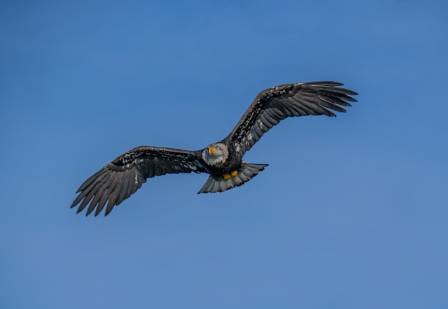
The bald eagle’s journey from the edge of extinction to a flourishing population is a powerful reminder of the impact that dedicated conservation efforts can have. What began as a crisis with only a few hundred nesting pairs left—turned into a success story, driven by strong laws, public awareness, and collaborative action. Yet, the work is not over. The ongoing threats facing bald eagles mean that we must remain vigilant in protecting their habitats and addressing human-caused dangers. By continuing to prioritize their conservation, we can ensure that this iconic symbol of the United States and a vital part of North America’s ecosystem—continues to soar in the skies for generations to come.