नोट
How Is Baseball Played
Baseball is among the most beloved sports worldwide. Although it has deep roots in the United States, the game has attracted fans and players across many nations. For newcomers, however, a baseball game can seem complicated at first glance.
Mila Lennox
लेखक
मेटा
संदर्भ फील्ड नीचे उपलब्ध।
टाइप
पल्स नोट
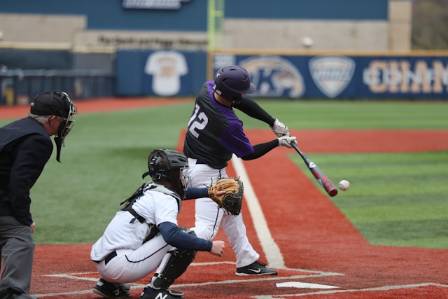
Baseball is among the most beloved sports worldwide. Although it has deep roots in the United States, the game has attracted fans and players across many nations. For newcomers, however, a baseball game can seem complicated at first glance.
This guide is designed to explain the fundamentals of baseball in a simple and easy-to-follow way. By the time you finish reading, you'll have a clearer understanding of the objectives, rules, and flow of the game, making it much easier to enjoy watching or playing baseball.
What Is the Main Idea Behind Baseball?
At its core, baseball is a competition between two teams. The goal is straightforward: score more runs than your opponent before the game ends. The team with the higher total score is declared the winner.
If both teams are tied after the scheduled number of innings, additional innings are played until one team finishes an inning with the lead. The exact rules regarding ties may differ depending on the league.
Unlike sports such as basketball or soccer, baseball is not governed by a game clock. Instead, contests are divided into innings. Professional competitions, including Major League Baseball (MLB), typically consist of nine innings. Youth and amateur leagues often play shorter games, usually lasting six or seven innings.
Should the score remain even after the final scheduled inning, the game enters extra innings. Play continues inning by inning until one team gains an advantage at the conclusion of an inning.
Understanding the Baseball Field
Before learning how baseball is played, it's important to understand the layout of the playing area.
A baseball field consists of two primary sections: the infield and the outfield.
The Infield
The infield forms a diamond shape made up of four bases:
Home Plate
First Base
Second Base
Third Base
Near the center of this diamond sits the pitching mound, where the pitcher begins each play.
The Outfield
Beyond the infield lies the outfield, a large grassy area enclosed by a fence. Two foul lines extend from home plate through first and third base and continue toward the fence. Any batted ball that lands beyond these lines is considered foul and is not counted as a fair ball.
The outfield fence stretches between the foul lines and usually curves outward. The shortest distance from home plate to the fence is near the foul poles, while the deepest part of the field is generally straightaway center field.
Field Dimensions
At professional and most organized levels, the distance between each base is 90 feet. The pitching rubber is positioned 60 feet 6 inches from home plate.
For younger age groups, these measurements are typically reduced. Outfield fence distances, however, vary from ballpark to ballpark and are not strictly standardized.
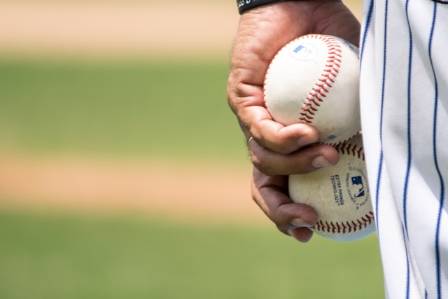
How a Baseball Game Is Played
While baseball contains countless rules and strategies, the overall process can be explained through a few key concepts.
Each play starts with the pitcher delivering the ball toward home plate. The opposing team's batter stands in the batter's box and attempts to hit the pitch.
The batter is not required to swing at every pitch. If no swing occurs, the umpire determines whether the pitch is a strike or a ball.
A strike is generally a pitch that passes through the strike zone, roughly between the batter's knees and chest. A ball is a pitch outside that area that the batter chooses not to swing at.
When a batter receives four balls, they are awarded first base, a situation known as a walk. If three strikes are accumulated, the batter is retired and recorded as an out.
Possible Outcomes of a Pitch
Every pitch can result in one of several outcomes:
Ball
If the batter does not swing and the pitch misses the strike zone, a ball is called.
Strike
A strike occurs when:
The batter swings and misses.
The batter does not swing at a pitch that passes through the strike zone.
Foul Ball
When the batter makes contact but hits the ball outside the fair territory, it becomes a foul ball. Most foul balls count as strikes, but a batter cannot strike out solely because of a foul ball after already having two strikes.
Fair Ball
If the batter hits the ball into fair territory, the play continues and a variety of outcomes become possible.
Pitchers use many different techniques to challenge batters. Some rely on velocity, while others use movement, spin, and deception to make hitting more difficult.
What Happens When the Ball Is Put Into Play?
Scoring in baseball requires players to safely advance around all four bases and return to home plate.
Once a fair ball is hit, the batter immediately runs toward first base.
The defensive team can record an out in several ways:
Catching the ball before it touches the ground.
Throwing the ball to first base before the batter arrives.
Tagging a runner with the ball while they are not on a base.
If the batter safely reaches base, the play is credited as a hit.
Types of Hits
The type of hit depends on how many bases are reached safely.
Single: Batter reaches first base.
Double: Batter reaches second base.
Triple: Batter reaches third base.
Home Run: Batter circles all bases and scores on one hit.
Most home runs occur when the ball is hit over the outfield fence, although inside-the-park home runs are also possible.
Each runner who successfully returns to home plate earns one run for their team.
An offensive half-inning ends after three outs are recorded. When that team bats again later in the game, they begin with empty bases.
Players and Their Positions
A baseball team fields nine players at a time, although teams generally carry additional players who can enter as substitutes.
When batting, players follow a predetermined batting order from first through ninth.
Managers typically place stronger hitters near the top of the lineup to maximize their opportunities at the plate.
Defensive Positions
Pitcher
The pitcher throws the ball to begin every play. Pitching requires specialized skills and is one of the most important roles on the field.
Catcher
The catcher positions behind home plate and receives pitches that are not hit by the batter.
First Baseman
Located near first base, this player often receives throws intended to retire runners.
Second Baseman
Positioned between first and second base, usually on the right side of the infield.
Shortstop
Stationed between second and third base, the shortstop covers a large area and is often one of the team's most athletic defenders.
Third Baseman
Plays near third base and frequently handles hard-hit balls.
Left Fielder
Covers the left portion of the outfield.
Center Fielder
Patrols the middle of the outfield and typically covers the greatest amount of ground.
Right Fielder
Defends the right side of the outfield.
Although these positions have general locations, players often shift depending on the batter, game situation, and team strategy.
Understanding Innings and Game Flow
To follow a baseball game effectively, it's important to understand how innings work.
Each inning consists of two halves.
Top of the Inning
The visiting team bats while the home team plays defense.
Bottom of the Inning
The home team bats while the visiting team takes the field.
For example, the game begins with the visiting team batting in the top of the first inning. After three outs are made, the teams switch roles, and the home team bats in the bottom half.
This alternating pattern continues throughout the game until all scheduled innings have been completed and a winner is determined.
Expanding Your Baseball Knowledge
Hopefully, this introduction has helped you gain a better understanding of baseball. While the basic rules are relatively simple, the sport contains countless layers of strategy, decision-making, and skill.
One reason baseball has remained popular for generations is its unpredictability. No matter how long someone has followed the game, there is always the possibility of witnessing something entirely new. Every contest presents fresh situations, exciting moments, and unique challenges that keep players and fans coming back for more.
Whether you're watching your first game or beginning your journey as a player, baseball offers a rich and rewarding experience that continues to captivate people around the world.

संबंधित

Botanical Illustration Guide: Sketching a Detailed Maple Leaf

हेनले सिटीज रिपोर्ट के अनुसार, 2024 में दुनिया के सबसे धनी शहर

Best Minimalist Wall Clocks for Modern Homes

8 Coffee Cup Types You Should Try for a Better Brew

Ultimate Recipes of Little Cakes You Have to Try