← वर्कस्पेस2 मिनट
नोट
North America’s Most Striking Ducks
Wood Duck — Nature’s Painted Masterpiece Adorned with iridescent greens, bold chestnut tones, and sharp white markings, the male Wood Duck (Aix sponsa) is easily one of the continent’s most visually striking birds. These cavity-nesting ducks often raise their young in tree hollows—sometimes dozens of feet above ground. Newly hatched ducklings make daring leaps from their lofty nests to the forest floor below, then scurry to nearby ponds to join their mother. Despite its mainstream appeal, this woodland waterfowl earns its top-tier status through sheer charisma and visual brilliance.
S
Sienna Reef
लेखक
मेटा
संदर्भ फील्ड नीचे उपलब्ध।
टाइप
पल्स नोट
Wood Duck — Nature’s Painted Masterpiece
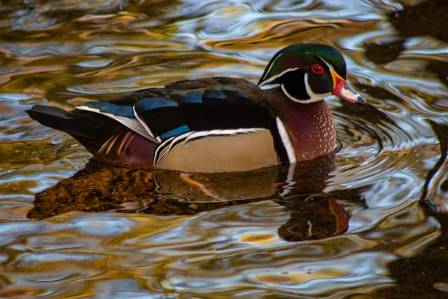
Adorned with iridescent greens, bold chestnut tones, and sharp white markings, the male Wood Duck (Aix sponsa) is easily one of the continent’s most visually striking birds. These cavity-nesting ducks often raise their young in tree hollows—sometimes dozens of feet above ground. Newly hatched ducklings make daring leaps from their lofty nests to the forest floor below, then scurry to nearby ponds to join their mother. Despite its mainstream appeal, this woodland waterfowl earns its top-tier status through sheer charisma and visual brilliance.
Northern Shoveler — The Spatula-Billed Specialist
With a beak shaped like a spoon and plumage that dazzles with emerald, white, and chestnut, the Northern Shoveler (Spatula clypeata) cuts a distinctive figure among dabblers. It sweeps its broad bill side to side through the water to filter out small aquatic creatures and plant matter. Though less social than some of its cousins, it’s one of the few dabblers known for a more enduring pair bond during the breeding season. While its summer molt results in a subdued appearance, this duck remains an unforgettable part of North America’s wetland tableau.
Hooded Merganser — The Flashy Crustacean Hunter
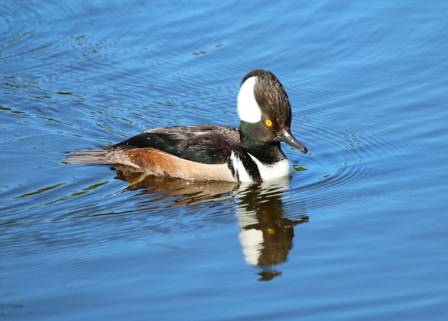
The Hooded Merganser (Lophodytes cucullatus) blends function and flair. This small diving duck boasts a bold black-and-white fan of feathers atop its head and piercing yellow eyes. It’s uniquely adapted to catch crayfish and other invertebrates in murky waters, thanks to excellent underwater vision and a finely serrated bill. It’s often elusive, preferring wooded swamps and quiet backwaters, but its rare appearances are always memorable.
Black-bellied Whistling-Duck — The Tropical Tree Percher
Exotic in both appearance and behavior, the Black-bellied Whistling-Duck (Dendrocygna autumnalis) sports vivid coral legs, a striking face mask, and a sleek chestnut belly. Native to the southernmost regions of North America, this upright, goose-like duck is often seen perched in trees or gliding noisily overhead in flocks. It communicates not with quacks but with high-pitched whistles, adding a whimsical charm to its already peculiar character. Although more common in Latin America, its range is steadily creeping northward.
Harlequin Duck — The Sea Mouse of Rugged Rapids

Few birds are as rugged—or as colorful—as the Harlequin Duck (Histrionicus histrionicus). Dressed in a lively mix of slate blue, rust, and white, this duck thrives in whitewater torrents where few others dare to venture. Nicknamed the “Sea Mouse” for its high-pitched squeaks, it forages on aquatic insects and crustaceans in crashing coastal streams and icy rivers. Despite their delicate appearance, these birds endure harsh conditions and even survive broken bones from their rapid-filled environments—a true symbol of toughness wrapped in elegance.
A Tribute to Diversity
From shimmering swamps to roaring rivers, North America’s duck population showcases an incredible spectrum of color, behavior, and habitat adaptation. Whether perched in trees or plunging through rapids, these remarkable birds bring life and character to every corner of the continent’s wetlands.
संबंधित

hi
आहार विशेषज्ञों के अनुसार 3 सर्वश्रेष्ठ एंटीऑक्सीडेंट से भरपूर चाय।
hi
नारियल के 5 प्रभावशाली लाभ

hi
ग्रेट बैरियर रीफ के बारे में 11 आश्चर्यजनक तथ्य
hi
दुनिया में शीर्ष 10 सबसे खतरनाक जानवर
en
The Origin and Evolution of Shui Mo Painting: A Journey Through Chinese Cultural Heritage

hi