नोट
The Magnificent Hungarian Parliament Building and Its Remarkable Story
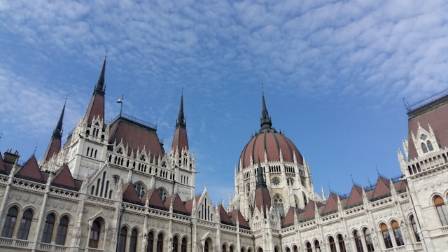
The spectacular legislative house of Hungary stands proudly as one of the most celebrated architectural landmarks in the city of Budapest. Globally recognized as a premier destination for travelers exploring Central Europe, this majestic structure serves as the official headquarters for the National Assembly of Hungary. The grand monument occupies a prominent position on the historical public square along the eastern banks of the famous Danube River, specifically situated on the vibrant flat side of the metropolitan area. Masterfully envisioned by a renowned local architect named Imre Steindl, the building showcases a brilliant blend of styles that prominently features historical design revivals. Since its grand debut at the start of the twentieth century, it has continuously held the title of the largest building throughout the entire nation. Experts note that its imposing structure drew heavy inspiration from the gothic municipal hall in Vienna, while its striking central dome incorporates elegant classical elements inspired by prominent Austrian religious architecture.
Thaddeus Bellamy
लेखक
मेटा
संदर्भ फील्ड नीचे उपलब्ध।
टाइप
पल्स नोट
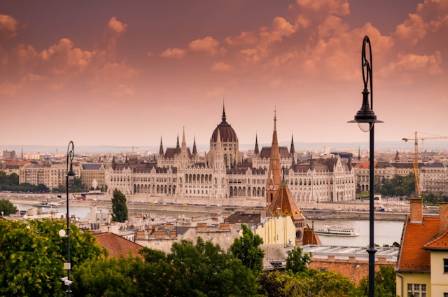
The spectacular legislative house of Hungary stands proudly as one of the most celebrated architectural landmarks in the city of Budapest. Globally recognized as a premier destination for travelers exploring Central Europe, this majestic structure serves as the official headquarters for the National Assembly of Hungary. The grand monument occupies a prominent position on the historical public square along the eastern banks of the famous Danube River, specifically situated on the vibrant flat side of the metropolitan area. Masterfully envisioned by a renowned local architect named Imre Steindl, the building showcases a brilliant blend of styles that prominently features historical design revivals. Since its grand debut at the start of the twentieth century, it has continuously held the title of the largest building throughout the entire nation. Experts note that its imposing structure drew heavy inspiration from the gothic municipal hall in Vienna, while its striking central dome incorporates elegant classical elements inspired by prominent Austrian religious architecture.
The Architectural Genesis and Construction History
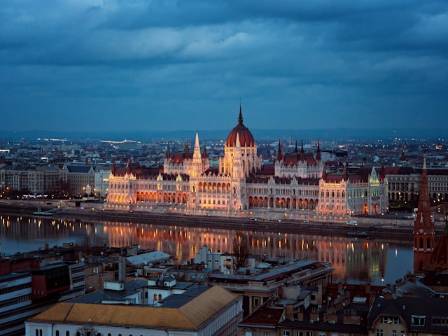
The historical journey of this magnificent masterpiece is deeply connected to the unification of three separate settlements which merged together to form the modern capital city in the late nineteenth century. Just a few years after this historic merger, the local assembly resolved to construct a magnificent and highly representative government house that would visually manifest the independent sovereignty of the population. From its very inception, the planners mandated that the grand facade must directly overlook the sweeping waters of the river. An international design contest was organized to find the perfect vision, and the creative blueprints submitted by Imre Steindl ultimately secured the top prize. Interestingly, the brilliant proposals from two other competitors were so highly regarded that they were eventually constructed right across the square to serve as the national museum of culture and the ministry of agriculture. A primary reason behind the selection of the winning design was its striking resemblance to the iconic legislative palace in London. Important political figures of that era believed it was absolutely vital for the new national symbol to reflect their strong diplomatic and cultural commitment to Western Europe, especially modeling their progress after the British political framework.
The actual physical labor on the winning architectural plan commenced in eighteen hundred and eighty-five, and a grand inauguration ceremony took place in eighteen hundred and ninety-six to coincide with the milestone thousandth anniversary of the arrival of the local population. Although the keys were officially transferred near the turn of the century, the final decorative elements were not completely polished until nineteen hundred and four. The sheer scale of the building required an astounding forty million structural blocks, half a million glittering precious gems, and roughly forty kilograms of pure gold accents. Tragically, the brilliant creative mind behind the layout suffered from complete blindness and passed away shortly before witnessing the final completion of his lifelong masterpiece.
Modern Legacy and Political Transformation
Following the tumultuous events of the Second World War, the domestic governing system transitioned into a single legislative chamber. In the contemporary era, the active government administration occupies only a localized section of the massive complex, allowing the remaining wings to host prestigious cultural events and international gatherings. During the mid-twentieth century when the nation operated under a socialist republic, an enormous glowing crimson star was mounted at the very apex of the central dome. This ideological symbol was permanently dismantled in nineteen hundred and ninety following the historic collapse of the regime. Just prior to that transition, a momentous historical event occurred when a prominent leader named Matyas Szuros stood upon the grand exterior balcony overlooking the main public plaza to officially declare the birth of the independent Hungarian Republic in late October of nineteen hundred and eighty-nine.