← वर्कस्पेस3 मिनट
नोट
The Windmills of Monet
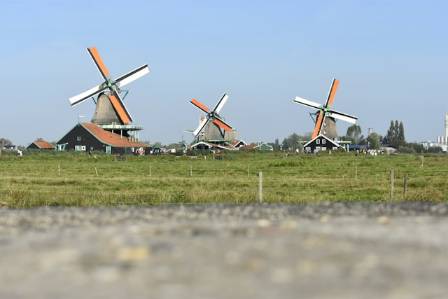
In 1871, during a time of personal upheaval and political unrest, Claude Monet — then living in exile in England because of the Franco-Prussian War — set off to Holland. He chose to spend time in Zaandam, a picturesque town just north of Amsterdam, celebrated for its canals, gabled houses, and countless windmills. The visit was brief but intensely productive. In only a few months, Monet created nearly twenty paintings, each capturing a different view of the town and its surrounding landscapes. These works reveal not just the physical features of Zaandam, but also the vibrant play of light, water, and atmosphere that would come to define his style.
O
Olivia Carter
लेखक
मेटा
संदर्भ फील्ड नीचे उपलब्ध।
टाइप
पल्स नोट
In 1871, during a time of personal upheaval and political unrest, Claude Monet — then living in exile in England because of the Franco-Prussian War — set off to Holland. He chose to spend time in Zaandam, a picturesque town just north of Amsterdam, celebrated for its canals, gabled houses, and countless windmills. The visit was brief but intensely productive. In only a few months, Monet created nearly twenty paintings, each capturing a different view of the town and its surrounding landscapes. These works reveal not just the physical features of Zaandam, but also the vibrant play of light, water, and atmosphere that would come to define his style.
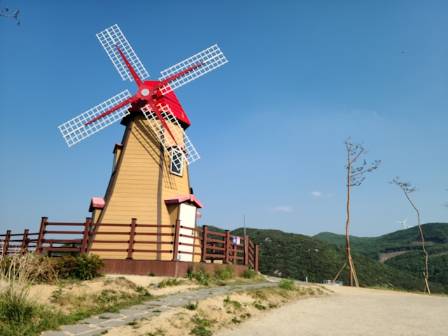
Monet’s excitement about Holland shines through in a letter he wrote to fellow artist Camille Pissarro, who was still in England at the time. In it, Monet described:
“There are the most amusing things everywhere. Houses of every colour, hundreds of windmills and enchanting boats, extremely friendly Dutchmen who almost all speak French…. I have not had time to visit the museums, I wish to work first of all and I’ll treat myself to that later.”
This glimpse of his enthusiasm shows how deeply the Dutch scenery inspired him — so much so that he delayed exploring museums to dedicate his time fully to painting outdoors.
Monet’s Return to Holland
More than a decade later, in May 1886, Monet returned to Holland at the invitation of the French Embassy in Amsterdam. Unlike his first hurried stay, this visit lasted about a month and took him across several regions, including The Hague, Rijnsburg, and Sassenheim. By this time, his technique had matured, and his focus turned to the brilliant tulip fields and windmills under shifting skies. These later paintings are filled with bold colors and more confident brushstrokes, reflecting not only the scenery but also Monet’s deepening mastery of light and movement.
The Impressionist Breakthrough
Before the rise of Impressionism, most painters worked indoors, often relying on sketches or memory to reconstruct landscapes under carefully managed lighting. Monet and his peers, however, rejected this tradition. They chose instead to work en plein air — directly in the open air — to seize the fleeting effects of sunlight, shadow, and atmosphere as they unfolded in real time.
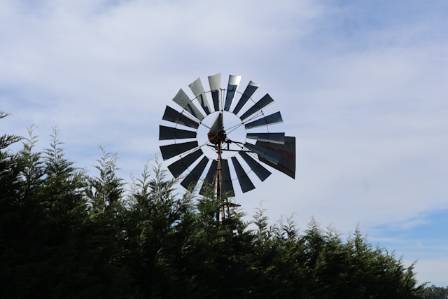
For Impressionists, the challenge was not to reproduce reality with photographic precision, but to convey the sensation of the moment. Windmills, with their moving sails, textured surfaces, and prominence in the Dutch landscape, became ideal subjects for this new approach.
Why Windmills?
Windmills held a unique fascination for artists like Monet and Pissarro:
Light and Shadow: The rotating blades cast shifting patterns that danced across fields, water, and rooftops, constantly changing with the sun’s angle.
Energy and Movement: Even when still, the design of the sails suggested motion, bringing vitality to otherwise tranquil rural views.
Symbol and Silhouette: Towering over flat landscapes, windmills offered strong vertical accents and instantly recognizable shapes, anchoring compositions with balance and rhythm.
In Monet’s hands, these structures became more than utilitarian machines. They were symbols of place and atmosphere, serving as backdrops for his experiments with brushwork and color. His windmill paintings capture not only the physical form of Holland but also its lively spirit — a land of wind, water, and sky in perpetual motion.
Lasting Impression
The windmills of Zaandam and beyond remain an enduring part of Monet’s artistic legacy. They illustrate how an ordinary subject, viewed through the lens of Impressionism, could be transformed into something timeless and poetic. For Monet, the windmill was not just a structure; it was a vehicle for exploring the essence of light, air, and fleeting experience — the very heart of Impressionism.
संबंधित

en
Best Minimalist Wall Clocks for Modern Homes

hi
दुनिया की टॉप 10 स्केटबोर्डिंग प्रतियोगिताएँ: अंतिम शेडिंग शोडाउन!

en
Best Homemade Lemonade Ever
hi
ड्रेस की लंबाई पर एक व्यापक मार्गदर्शिका: अपनी आदर्श हेमलाइन का चयन करें

en
North America’s Most Striking Ducks
en