नोट
Unlocking the Secrets of Space Rockets
For centuries, humans have been captivated by the mysteries of space, and at the center of this exploration stands the extraordinary invention known as the space rocket. These towering machines, reaching heights comparable to skyscrapers, have transported astronauts, satellites, and probes far beyond Earth, revealing secrets of the universe and pushing the boundaries of human knowledge.
Dakota Mills
लेखक
मेटा
संदर्भ फील्ड नीचे उपलब्ध।
टाइप
पल्स नोट
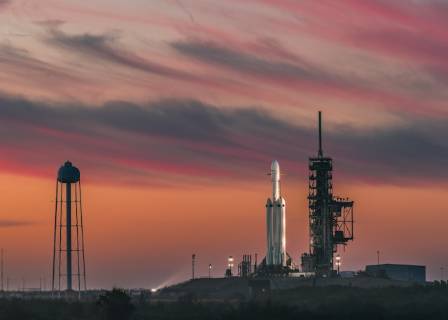
For centuries, humans have been captivated by the mysteries of space, and at the center of this exploration stands the extraordinary invention known as the space rocket. These towering machines, reaching heights comparable to skyscrapers, have transported astronauts, satellites, and probes far beyond Earth, revealing secrets of the universe and pushing the boundaries of human knowledge.
But what makes these incredible machines work, and what innovations have enabled modern space exploration? As a Data Source Specialist and technology journalist, I’ve researched the physics, engineering, and history of rocket technology to give you a clear and detailed look at these engineering wonders.
The Science Behind Rocket Propulsion
Every rocket relies on the principle behind Newton’s third law: for every action, there is an equal and opposite reaction. Rockets propel themselves by forcefully expelling high-speed gases in one direction, which generates an equal thrust in the opposite direction, sending the vehicle skyward.
Unlike airplanes, which rely on lift from their wings, rockets must produce enough thrust to overcome Earth’s gravitational pull and reach “escape velocity,” the minimum speed required to break free from gravity.
To achieve this, rockets use fuels and oxidizers stored in separate tanks and mixed in a combustion chamber. When ignited, these chemicals create high-pressure, high-temperature gases that shoot out through a nozzle, producing the force that launches the rocket into space.
Key factors that define rocket engine performance include
Exhaust Velocity: The speed at which gases leave the engine nozzle directly affects thrust. Modern engines typically reach velocities of 2,000 to 4,500 meters per second.
Thrust-to-Weight Ratio: This ratio determines whether a rocket can overcome gravity efficiently. Most space rockets operate in the 1.2 to 2 range.
Specific Impulse: This measures efficiency, showing how much thrust is produced per unit of fuel. Modern liquid-fueled rockets typically achieve 300–450 seconds of specific impulse.
Fuel selection is critical. The type of propellant, its energy density, and combustion properties all impact performance. Common combinations include liquid hydrogen with liquid oxygen or solid fuels like ammonium perchlorate mixed with aluminum.
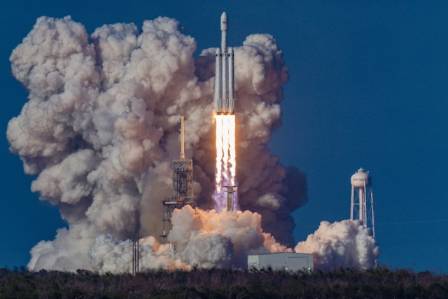
The Structure of Modern Rockets
While the core principles of propulsion remain the same, modern rockets are far more sophisticated than early models. Today’s vehicles are multi-stage systems designed for maximum performance, each part carefully optimized for efficiency and reliability.
A standard rocket, such as the European Space Agency’s Ariane 5, includes several essential components:
Rocket Stages: Most rockets have multiple stages, each with its own engines. Lower stages, often with solid boosters, lift the rocket through the dense lower atmosphere. Upper stages, powered by more efficient liquid engines, carry the payload into orbit.
Guidance and Control Systems: Advanced computers and sensors monitor trajectory and adjust course in real time. Thrust vectoring and attitude control allow precise navigation throughout the flight.
Payload and Fairings: Satellites, spacecraft, or scientific instruments are housed in the rocket’s nose cone, called the fairing. This protective structure shields the payload during the high-speed initial ascent and is jettisoned once the rocket reaches thinner air.
Propulsion Systems: At the heart of the rocket is the engine, powered by fuels and oxidizers. Liquid engines, such as Ariane 5’s Vulcain 2, use cryogenic liquid hydrogen and oxygen to produce enormous thrust. Solid boosters provide an initial surge to lift the rocket off the pad.
The Development of Rocketry and Space Travel
The story of rocket technology is one of human creativity and relentless ambition. From ancient Chinese gunpowder rockets to pioneers like Robert Goddard and Wernher von Braun, innovation has driven this field forward.
A key milestone was the Soviet Union’s Sputnik 1 launch in 1957, which ignited the space race and accelerated technological progress. The Apollo program, culminating in Moon landings, showcased the power of rockets like the Saturn V, which produced an astonishing 34.5 million newtons (7.6 million pounds) of thrust.
In recent decades, private companies such as SpaceX and Blue Origin have transformed space travel. Reusable rockets, like SpaceX’s Falcon 9, can launch payloads into orbit and return to Earth, lowering costs and enabling more ambitious missions.
Challenges and the Road Ahead
The future of rocket technology holds great promise, from nuclear propulsion to ion engines and more reusable launch vehicles. These advancements could make space travel faster, cheaper, and more efficient, reaching deeper into the solar system.
However, challenges remain. Rocket launches produce greenhouse gases and pollutants that can harm the environment. Developing cleaner fuels and more sustainable launch methods is critical. Reliability and safety are also major concerns, especially as space tourism expands and more people rely on these systems.
Despite these hurdles, the potential is enormous. Advanced propulsion could increase range and payload capacity, while reusable rockets could revolutionize access to space. These developments will drive further innovation, investment, and ambitious projects, pushing humanity farther into the cosmos.
Conclusion: Humanity’s Journey to the Stars
Space rockets, with their immense power and elegance, symbolize human ingenuity and curiosity. From ancient experiments to today’s cutting-edge reusable rockets, their evolution reflects our determination to explore the unknown.
By understanding the science and engineering behind these machines, we can better appreciate the monumental achievements they represent and the possibilities they open. As rocket technology continues to advance, these vehicles will carry humanity ever closer to the stars, unlocking the mysteries of the universe and inspiring generations to come.
The night sky reminds us of our potential. With each launch, space rockets demonstrate the extraordinary capabilities of human creativity, and they remain the vehicles that will carry us toward a limitless future among the stars.
संबंधित

Small Balcony Ideas for Maximum Impact

Top 8 Pro Tips for Making Perfect Homemade Ice Cream

वेनेजिया की ग्रैंड नहर

Global Afternoon Tea Indulgence

The Heritage of Vietnamese Attire: A Study of Cultural Identity and Textile Artistry