Species Overview: Not a “Lesser” Panda
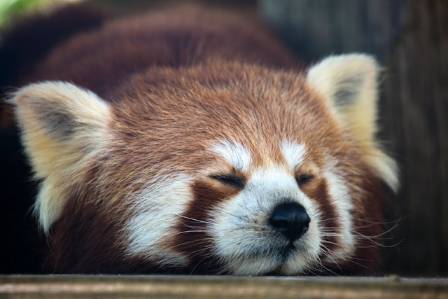
Red pandas are charming arboreal mammals native to the high-altitude temperate forests of Asia, renowned for their reliance on bamboo—a dietary trait they share with giant pandas. Despite this similarity and their shared common name, the two species are not closely related; red pandas are far smaller and hold the unique distinction of being the only living members of the family Ailuridae. Found in the Himalayas and mountainous regions of Myanmar, China, Nepal, India, and Tibet, these creatures play a vital role in their forest ecosystems, yet their taxonomic classification has long been a topic of scientific debate, reflecting their evolutionary distinctiveness from both raccoons and bears.
Physical Adaptations: Built for Forest Survival
Red pandas are easily recognizable by their striking ruddy coat, which serves as exceptional camouflage amid the fir tree canopies where reddish-brown moss and white lichens cloak the branches. They have large, round heads, short snouts, and pointed ears, with white faces marked by reddish-brown “tear stripes” stretching from the eyes to the mouth corners—a feature thought to shield their eyes from harsh sunlight. Their bushy tails, ringed with alternating red and buff bands, not only aid in balance during climbing but also provide insulation against frigid mountain winds. Equipped with five widely separated toes and semi-retractable claws, red pandas are agile climbers, and their flexible ankles allow them to descend tree trunks headfirst—a rare ability among carnivores. They also possess unique scent-marking adaptations: anal glands, urine, and footpad glands that secrete a colorless, odorless liquid (to humans) to delineate territories. Most remarkably, red pandas use the underside of their tongues—lined with cone-like structures—to collect and analyze scents, making them the only carnivores with this specialized sensory tool.
Taxonomic Journey: From Raccoon Relatives to a Family of Their Own
The taxonomic position of red pandas has puzzled scientists for centuries. When first described in 1825, they were classified as members of the raccoon family (Procyonidae) due to ecological similarities and morphological traits like their ringed tails, dentition, and head shape—a classification that sparked immediate controversy. Later, DNA analysis led researchers to place them in the bear family (Ursidae), aligning them more closely with giant pandas. However, cutting-edge molecular phylogenetic studies have since confirmed that red pandas belong to their own independent family: Ailuridae. As ancient members of the order Carnivora (superfamily Musteloidea), they are most closely related to a group encompassing skunks, raccoons, and weasels. Recent genetic research has further revised their classification, revealing that red pandas are not just two subspecies but two distinct species: Ailurus fulgens fulgens (predominantly found in Nepal, India, and Bhutan) and Ailurus fulgens styani (also called Ailurus fulgens refulgens, native to China and Myanmar), with the latter being larger and having a deeper red coat than the former.
Size and Lifespan: Small but Long-Lived
Adult red pandas are compact in size, typically weighing between 3.6 and 7.7 kilograms (8 to 17 pounds) and measuring 56 to 62.5 centimeters (22 to 24.6 inches) in body length, plus a tail of 37 to 47.2 centimeters (14.6 to 18.6 inches). In captivity, they can live up to 23 years, though wild individuals likely have shorter lifespans due to environmental challenges. Signs of aging typically appear around 12 to 14 years old; female red pandas stop breeding after this age, while males may retain reproductive capability for longer, highlighting gender differences in their life cycles.
Native Habitat: Mountain Forests of Asia
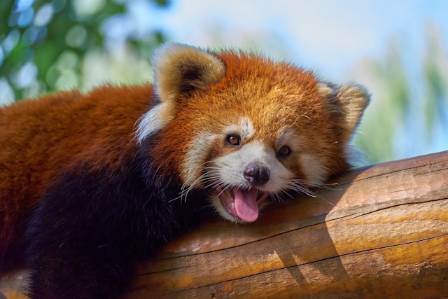
Red pandas inhabit high-altitude temperate forests with dense bamboo understories, spanning a range from northern Myanmar to the western Sichuan and Yunnan provinces of China, as well as suitable habitats in Nepal, India, and Tibet. Each of the two distinct species has its own preferred range: Ailurus fulgens fulgens thrives in the Himalayan regions of Nepal, India, and Bhutan, while Ailurus fulgens styani is concentrated in the mountain forests of China and Myanmar. These habitats provide the critical bamboo resources red pandas depend on, along with tree hollows and thickets for nesting and shelter from predators like leopards and jackals.
Communication and Defense: Quiet but Expressive
Red pandas are generally quiet animals, but they use a range of subtle vocalizations to communicate at close range, including squeals, twitters, and huff-quacks. They may also hiss or grunt when threatened, and young cubs emit a high-pitched whistle or bleat to signal distress to their mothers. When faced with danger, their first line of defense is to climb trees or rocks, leveraging their agile climbing skills to escape predators. This reliance on arboreal escape routes underscores the importance of intact forest canopies for their survival in the wild.
Diet: Bamboo Specialists with Flexible Tastes
Bamboo constitutes approximately 95% of the red panda’s diet, but unlike giant pandas, which consume nearly all parts of the bamboo plant (including the woody culm), red pandas are selective feeders, preferring the nutrient-rich leaf tips and tender shoots when available. They use their modified wrist bone—a pseudo-thumb shared with giant pandas—to grasp bamboo stems, while their robust dentition and simple carnivore stomach allow them to digest tough plant material despite their carnivorous ancestry. To supplement their bamboo diet, red pandas forage for roots, succulent grasses, fruits, insects, and grubs, and they have been known to occasionally hunt and eat small birds and mammals. In captivity, such as at the Smithsonian’s National Zoo, they are fed bamboo, seasonal bamboo shoots, leaf-eater biscuits, and enrichment treats like apples, grapes, bananas, and blueberries.
Sleep Habits: Crepuscular and Cold-Adapted
In human care, red pandas can be active at any time of day, but they are primarily crepuscular, meaning they are most active at dawn and dusk. On average, they spend about 45% of the day awake, with increased activity during cooler weather—especially during the winter mating season. In extremely cold temperatures, red pandas enter a state of dormancy, lowering their metabolic rate to conserve energy and waking every few hours to forage for food. This adaptation allows them to expend as little energy as sloths, a critical advantage given the low nutritional value of their bamboo diet. They also regulate their body temperature through behavioral adaptations: curling into a tight ball to retain heat in cold weather, and stretching out on branches and panting to cool down when temperatures rise.
Social Structure: Solitary Except for Breeding
Red pandas are solitary animals for most of the year, with each individual occupying a home range of about 1 square mile in the wild. The only exception is during the breeding season, when males and females come together to mate. In captivity, however, most breeding pairs live together year-round, as the controlled environment reduces competition for resources and supports successful reproduction. This solitary lifestyle reflects their need to maximize access to bamboo resources, which are often scattered across their mountain habitats.
Reproduction and Development: Timed for Bamboo Abundance
Red pandas have a seasonal breeding cycle tied to day length: in the Northern Hemisphere, breeding occurs from January to March, while in the Southern Hemisphere, it extends from June to August, triggered by the rapid change in photoperiod after the winter solstice. Mating takes place on the ground, and females experience delayed implantation—a reproductive strategy where the fertilized egg does not immediately attach to the uterine wall—resulting in a gestation period that ranges from 93 to 156 days. This extended gestation is thought to be linked to their slow metabolic rate, and late spring births coincide with the emergence of tender, digestible bamboo shoots and leaves, ensuring a steady food supply for both mothers and cubs. Females build nests in tree holes, hollow stumps, tree roots, or bamboo thickets, lining them with moss, leaves, and soft plant material to create a warm, safe space for their young. Litters typically consist of two cubs, born between May and July in the Northern Hemisphere, fully furred to protect them from the cold mountain climate. Newborn Ailurus fulgens fulgens cubs weigh just 90 to 110 grams (3 to 4 ounces), and they stay with their mother for about one year, reaching full size and sexual maturity at around 18 months old.
Fun Facts and Conservation Status
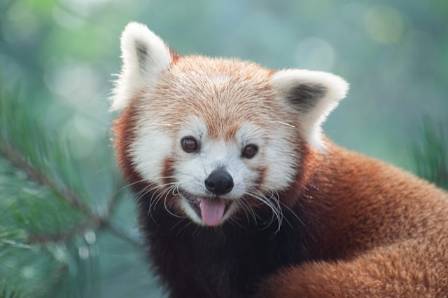
Red pandas boast several unique traits that set them apart: they share the giant panda’s pseudo-thumb for grasping bamboo, they can enter a dormant state to survive cold temperatures, and they are the sole living members of the Ailuridae family. According to conservation assessments, red pandas are currently classified under the IUCN Red List categories, with their status reflecting the need for ongoing habitat protection. Their biggest threats include deforestation, habitat fragmentation, and climate change, which disrupt bamboo growth and reduce available living space. Conservation efforts, including protected area management and captive breeding programs, are crucial to ensuring the survival of these beloved forest dwellers.