← वर्कस्पेस3 मिनट
नोट
Top 10 Fascinating Facts About Emperor Penguins
Emperor penguins are the undisputed monarchs of the Antarctic ice. Adapted to survive in one of Earth’s most unforgiving environments, these birds are full of remarkable traits and behaviors. Here are ten impressive facts about these extraordinary creatures.
D
David Lennox
लेखक
मेटा
संदर्भ फील्ड नीचे उपलब्ध।
टाइप
पल्स नोट
Emperor penguins are the undisputed monarchs of the Antarctic ice. Adapted to survive in one of Earth’s most unforgiving environments, these birds are full of remarkable traits and behaviors. Here are ten impressive facts about these extraordinary creatures.
Born of Ice
Emperor penguins live exclusively in Antarctica, where they raise their young on "fast ice"—frozen sea water attached to the shoreline or ice shelves. From the moment they hatch, their lives are tied to this frozen environment, rarely straying beyond its boundaries.
Biggest of the Bunch
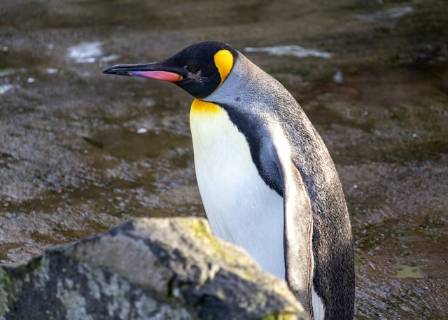
Among the 18 known penguin species, emperors are the largest. Adults can reach about 120 cm in height—roughly the size of a young child—and weigh around 40 kg. Their size can vary dramatically over the seasons. Ancient relatives of the emperor penguin, however, were even more massive—some fossil records suggest prehistoric species stood nearly 2 meters tall.
A Rarer Sight
Though iconic, emperor penguins are the least numerous among their Antarctic counterparts, with an estimated 265,000 to 278,000 breeding pairs. Ongoing studies are helping scientists understand their behaviors and habitats, which is key to supporting their survival as the environment changes.
Tracked from the Sky
Modern technology has revolutionized how emperor penguins are studied. Researchers have located and monitored colonies using satellite images, identifying telltale signs like guano stains on the ice. Currently, 66 colonies are known, with half of them first spotted from space.
A Chilly Romance
Emperor penguins begin their courtship during the dark, frigid Antarctic winter. After mating, the female lays a single egg and transfers it to the male, who carefully balances it on his feet under a brood pouch. The female then heads to sea for several weeks while the male protects and incubates the egg through brutal cold and strong winds.
Masters of Cold Survival
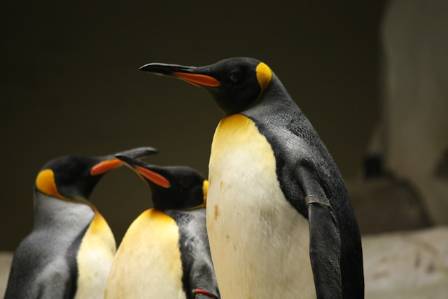
Surviving temperatures as low as -50°C and winds up to 200 km/h, emperor penguins are uniquely built for life in extreme cold. They have dense feathers, a thick fat layer, and compact flippers and beaks to retain warmth. Even their feet are designed for ice, with special fats and strong claws to prevent frostbite and aid traction. Perhaps most astonishingly, they form tight huddles of thousands to share body heat, rotating from outer to inner positions.
Deep Sea Champions
When it comes to diving, emperor penguins are record holders. They can plunge to depths of over 560 meters and remain underwater for more than half an hour. These feats help them hunt in the frigid, food-rich waters beneath the ice.
Seafood Specialists
Their diet mainly includes Antarctic silverfish, various other fish, krill, and squid. To build up energy stores or feed their young, adult penguins may consume up to 6 kg of food in a single day.
Extreme Fasting
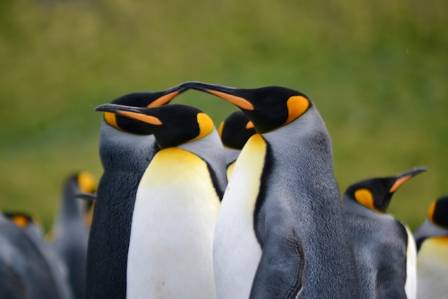
Male emperors go without food for up to four months—from the beginning of courtship until the chick hatches and the female returns. During this long wait, they rely solely on body fat accumulated during summer feeding, often losing nearly half their weight.
Scaling the Ice
While emperors are built for swimming, they can also climb steep ice surfaces when necessary. In recent years, several breeding colonies have been found atop ice shelves, a sign they may be adapting to shrinking sea ice. However, this shift might not be enough if the current pace of climate change continues.
These incredible adaptations showcase just how resilient and specialized emperor penguins are, yet also highlight how delicate their icy world has become.
संबंधित

hi
दुनिया के शीर्ष 12 सबसे अच्छे पूल खिलाड़ी

hi
हार्वेस्ट गोल्ड इंटीरियर टोन के साथ अपने रहने की जगह को बदलें

en
A Professional Guide to Building Impressive Sandcastles

hi
दुनिया की टॉप 10 स्केटबोर्डिंग प्रतियोगिताएँ: अंतिम शेडिंग शोडाउन!

en
Draw a Kitten in 10 Easy Steps

en