← वर्कस्पेस4 मिनट
नोट
Rare Discovery in Bavaria: The Snow-White Fox and the Science of Leucism
A recent rare sighting in Bavaria stirred excitement among nature lovers and experts alike: near Munich, a nature photographer encountered a completely white fox at dusk—a striking anomaly that sparked curiosity about its unusual appearance. This article delves into the story behind the discovery, the biological phenomenon that causes white fur in red foxes, and why similar traits appear in other animals.
M
Margaret
लेखक
मेटा
संदर्भ फील्ड नीचे उपलब्ध।
टाइप
पल्स नोट
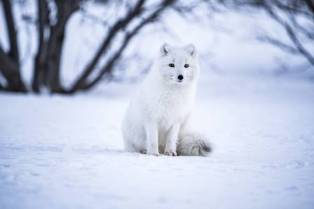
A recent rare sighting in Bavaria stirred excitement among nature lovers and experts alike: near Munich, a nature photographer encountered a completely white fox at dusk—a striking anomaly that sparked curiosity about its unusual appearance. This article delves into the story behind the discovery, the biological phenomenon that causes white fur in red foxes, and why similar traits appear in other animals.
The Discovery: A Snow-White Fox in Munich’s Outskirts
Nature photographer Dominik Reigl stumbled upon the rare animal during one of his regular exploration tours in the Munich district. After a largely uneventful outing, he was preparing to leave when he spotted “a small, completely white fox with blue eyes”—a sight he described as a unexpected surprise. To protect the young fox from disturbance by curious onlookers, Reigl chose not to disclose the exact location. The Bavarian Society for the Protection of Birds (LBV) confirmed the animal is a red fox (Vulpes vulpes), distinguished by its snow-white fur rather than the species’ typical reddish-brown coat.
Not an Arctic Fox, Nor an Albino
At first glance, the white fox could be mistaken for an Arctic fox, but Arctic foxes have small round ears and are not native to Germany. It is also not an albino, a common misconception. Albino animals lack all pigment, resulting in red or pink eyes—yet this fox has bright blue eyes. Instead, its white fur stems from a genetic condition called leucism, which affects pigment production in fur or feathers while leaving eye color intact (eyes may be blue, brown, or other natural hues). This pigment disorder is more commonly observed in birds like thrushes or crows but is extremely rare in red foxes.
Leucism: The Science Behind White Fur/Feathers
Leucism is a naturally occurring genetic peculiarity characterized by partial or complete loss of color in fur, feathers, or skin. Unlike albinism, which involves a lack of pigment production (even with functional pigment cells), leucism occurs when pigment cells are absent entirely in affected areas or gradually break down over time. This is caused by genetic defects that hinder the formation of new pigment cells. The condition can manifest as patchy white spots or full white coverage, and it affects a range of animals—from birds and mammals to reptiles and amphibians. For the red fox in Bavaria, leucism resulted in an entirely white coat, a rare full-expression of the trait.
White Feathers in Urban Birds: A Common Sight
While fully white red foxes are rare, leucism is frequently observed in urban birds—especially blackbirds. Normally black, blackbirds with partial white plumage stand out in cities, catching human attention. According to the Nature and Biodiversity Conservation Union (NABU), other dark-colored urban birds like house sparrows, jackdaws, and carrion crows are also affected, though leucism is most prevalent in blackbirds. This urban prevalence has led experts to explore links between city environments and the expression of the trait, though the exact connection remains under study.
Key Differences Between Leucism and Albinism
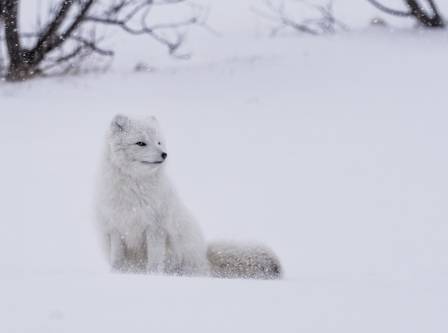
Though both conditions result in pale or white appearance, leucism and albinism are biologically distinct. Albinism is caused by a lack of melanin production, even when pigment cells (melanocytes) are present, leading to white fur/feathers, pink/red eyes (due to blood vessel visibility), and often pale skin, beaks, or feet. Leucism, by contrast, involves the absence or degradation of pigment cells themselves—so eye color remains natural (blue, brown, etc.), and non-feathered/non-furred areas (like skin or beaks) are unaffected. This difference is critical: the Bavarian fox’s blue eyes immediately ruled out albinism, pointing to leucism as the cause.
Survival Challenges for Leucistic Animals
Leucistic animals face unique challenges in the wild. Their unusual coloration makes them more visible to predators, as camouflage is compromised. They may also struggle to attract mates, as many species rely on natural coloration for courtship displays. Exact statistics on leucism are scarce due to a lack of systematic surveys, but experts estimate it affects only a small single-digit percentage of animal populations. For the young white fox in Bavaria, these challenges highlight the importance of protecting its location to minimize human disturbance.
What Causes Leucism? Genetics, Environment, and Age
The triggers for leucism are diverse. Hereditary factors are a primary cause—genetically affected animals may gradually lose more pigment over their lifetimes. Environmental factors like diseases or nutritional deficiencies can also play a role, similar to how white spots form on human fingernails due to nutrient gaps. Frequent molting, especially in urban areas, may exacerbate patchy color loss, as aging birds lose more pigment cells and develop additional white spots. For the Bavarian fox—relatively young with a fully white coat—experts suspect it was born with the trait, pointing to genetics as the primary driver.
Urban Observations: Leucism in Human-Altered Landscapes
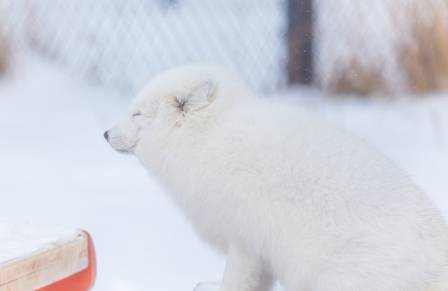
NABU notes a potential link between urbanization and leucism, though whether cities promote or reduce the trait remains unclear. Frequent molting in urban birds, possibly due to environmental stressors or diet, may contribute to increased white plumage. Urban residents often report sightings of leucistic birds—like the nearly all-white blackbird in Berlin’s Steglitz neighborhood, which became a local landmark. These sightings offer valuable opportunities for citizens to observe and document rare biological traits, bridging the gap between everyday life and wildlife science.
संबंधित

en
10 Surprising Facts About Warsaw’s Iconic Palace

en
Getting Started: Snowboarding for Beginners
en
The Oceanic Ballerina: Unveiling the Secrets of the Longfin Bannerfish
hi
अल्पाका के बारे में 15 बातें जो शायद आप नहीं जानते होंगे

hi
महिलाओं के लिए आदर्श टी-शर्ट चुनने के लिए संपूर्ण मार्गदर्शिका
en